
Getting Started with Your First Adult Colouring Book
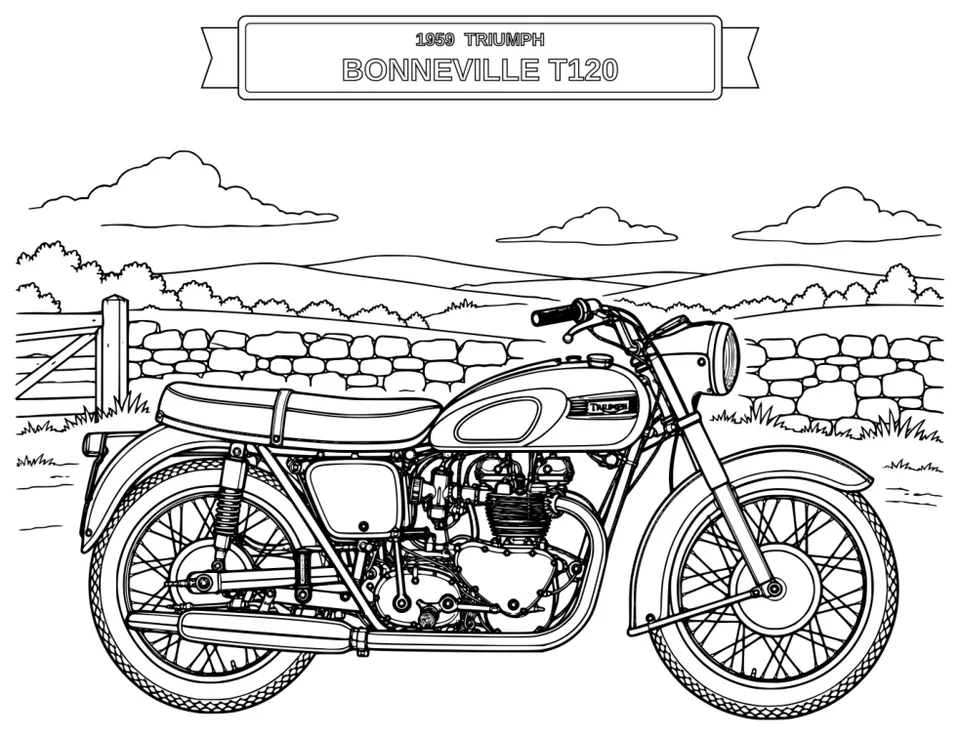
A new colouring book can be surprisingly difficult to start. You open a page, look at the details and wonder which colour belongs where.
Begin with a smaller decision. Choose one part of one subject and give it a little colour. The first page is a place to learn what you enjoy doing.
Keep your kit simple
A small set of coloured pencils, a sharpener and an eraser will give you plenty to work with. Put a spare sheet of paper behind the page and make yourself comfortable in good light.
Start with pencils if you are unsure about materials. Before trying a different medium, test it on a suitable spare sheet and check how it behaves. A protective sheet is useful but does not guarantee that wet media will stay on one side.
You can add more tools later once you know which effects you want to explore.
Choose the subject that catches your eye
Do you recognise the motorcycle? Does the aircraft remind you of a museum visit? Is there a car you have always wanted to own?
That interest gives you a reason to look closely. Choose a page because you want to spend time with it. Leave the most detailed illustration for another day if you prefer.
The four Legends in Line Art books cover motorcycles, American muscle cars, World War II fighters and steam locomotives. Each has a companion website to help you explore its subjects.
Pick a small palette
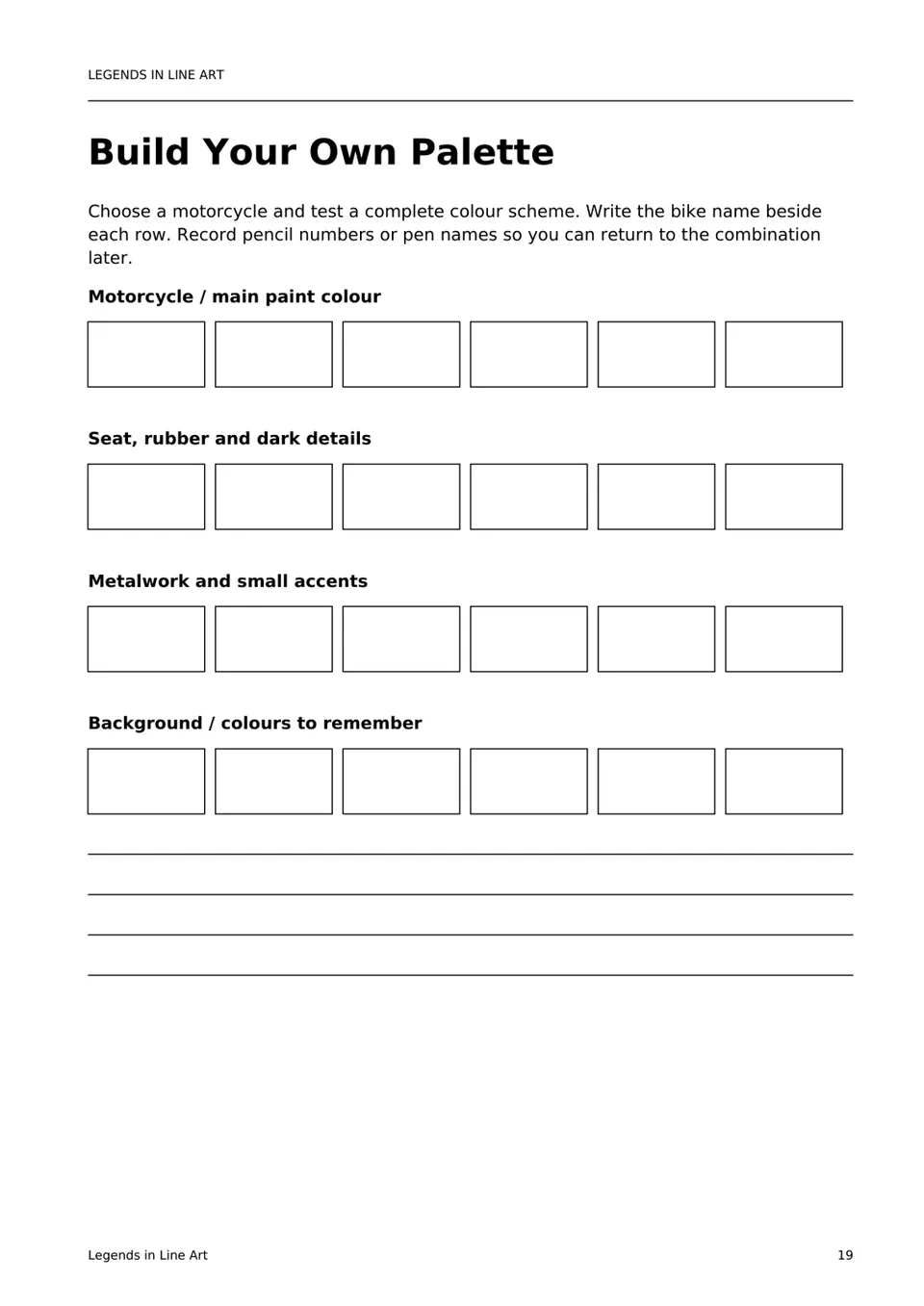
Choose a main colour, a darker shade and a lighter shade. Add a neutral pencil for tyres, shadows or mechanical details where appropriate.
You can follow a reference image or invent a scheme of your own. If historical accuracy matters to you, look at several suitable photographs before choosing a finish. A colour interpretation is a creative example rather than proof of a particular machine's exact appearance.
Build colour gradually
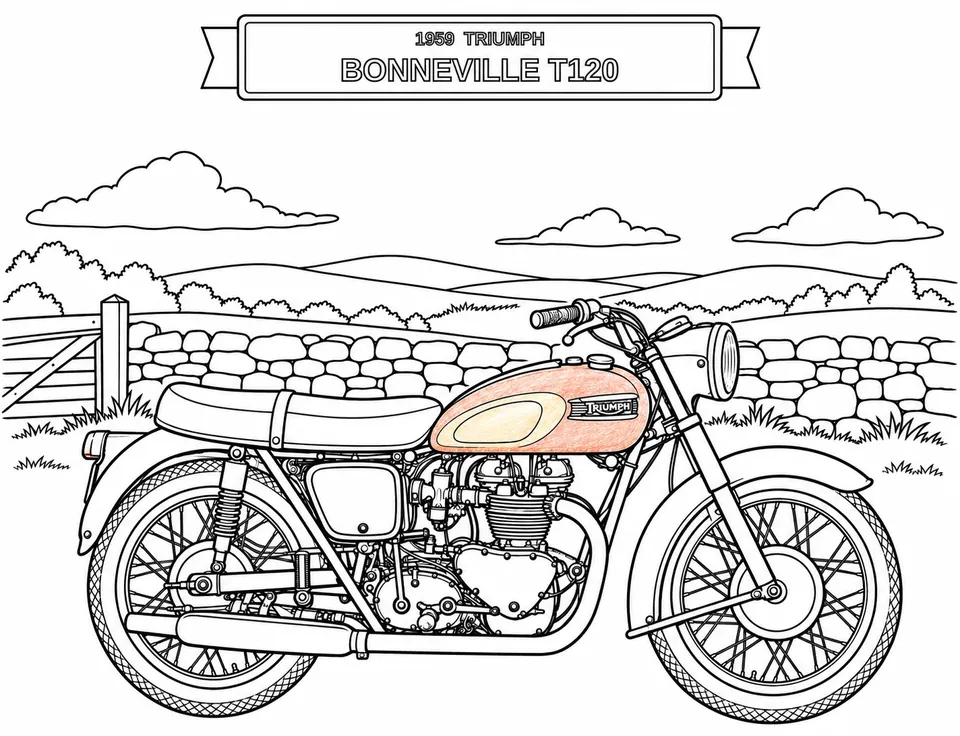
Make a light first pass so you can adjust the colour as you go. Add a second layer where you want a richer finish. Try a little extra shade along one edge to suggest the curve of a tank, wing or body panel.
Leave some paper showing where you want the brightest highlights. Test a pencil combination on spare paper before using it in a prominent part of the illustration.
Work at a pressure that feels comfortable. There is no requirement to use every pencil in the box.
Finish a section rather than racing through a page
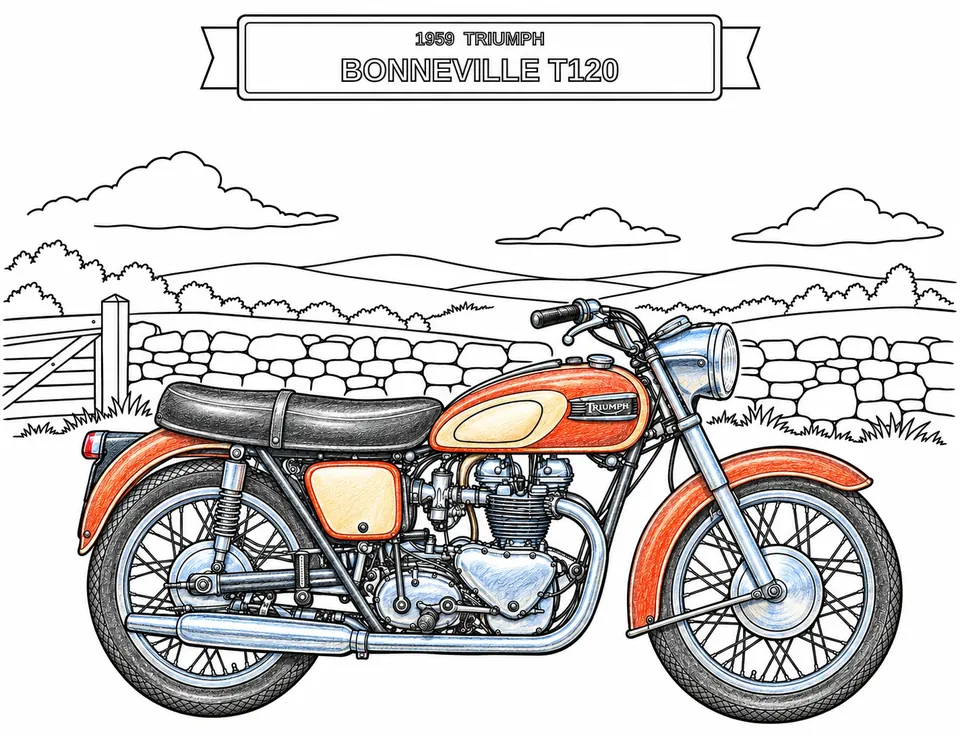
Try a fuel tank, a bonnet or part of a locomotive. When you reach a natural stopping point, put the pencils down and return when you feel like it.
A page can take several sessions. You may discover that choosing the colours is your favourite part or that you enjoy the small mechanical details most.
Use the companion guides when they help
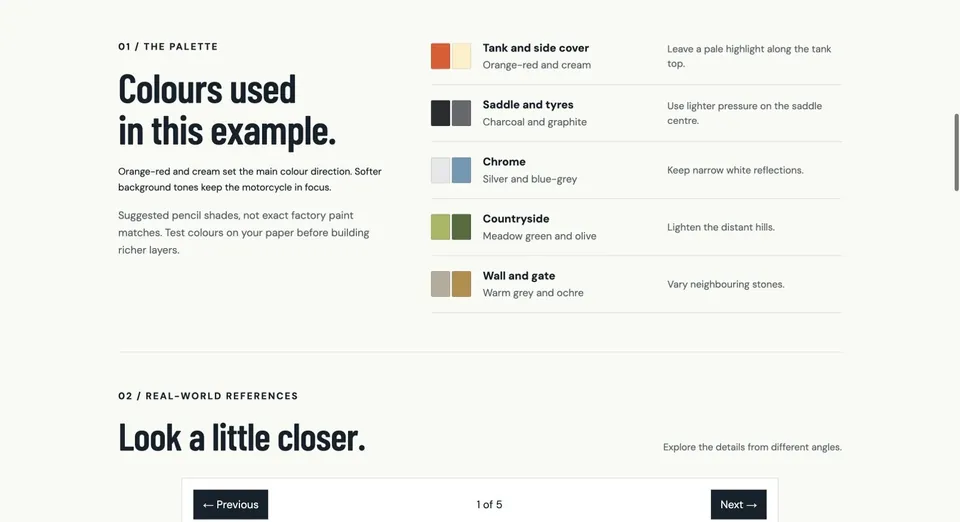
The Legends in Line Art website includes subject galleries and practical colouring guides. Use them for reference ideas, colour suggestions and techniques you would like to try.
Coloured examples are inspiration for your own page. You are free to make different choices.
Choose your first book at colouringbooksformen.com or explore the getting started guide.
Coloured references are inspiration for your own work. They are not pre-coloured pages in the books. Colouring stages and alternative finishes are digitally illustrated examples.