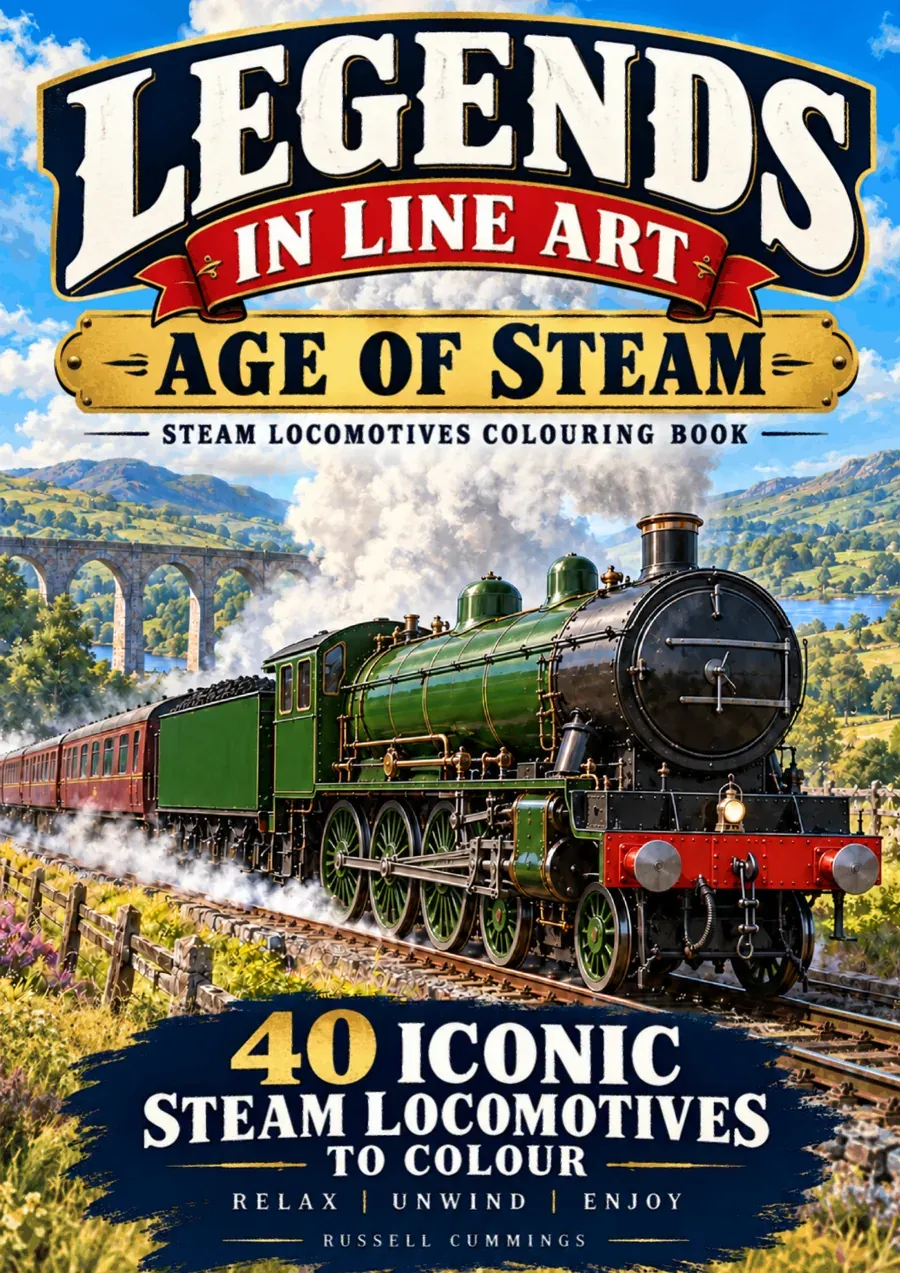
Forty distinctive engines
Detailed landscape illustrations covering early pioneers, passenger favourites and freight workhorses.

Available now on Amazon
Forty locomotives. Two centuries of ingenuity. A journey from the exposed machinery of the early railways to streamlined express engines and the giants of heavy freight.
Explore British pioneers, American legends and remarkable engines from Europe, Asia, Africa, Australia and New Zealand. Bring their wheels, rods and sweeping boiler shapes to life in your own colours.
Detailed landscape illustrations covering early pioneers, passenger favourites and freight workhorses.
Concise stories and technical profiles explain what made each locomotive distinctive.
A memorable fact accompanies every engine, with sources for further discovery.
Colouring guidance and single-sided art pages leave room for a period finish or your own palette.
Using markers? Place a protective sheet behind the page.
Explore Puffing Billy through a pencil example, practical colour suggestions and reference photographs.
Explore the colouring guideFor my father-in-law, Gary. This book is inspired by his passion for trains.
All forty locomotives in book order. Open each fact to discover a little more.
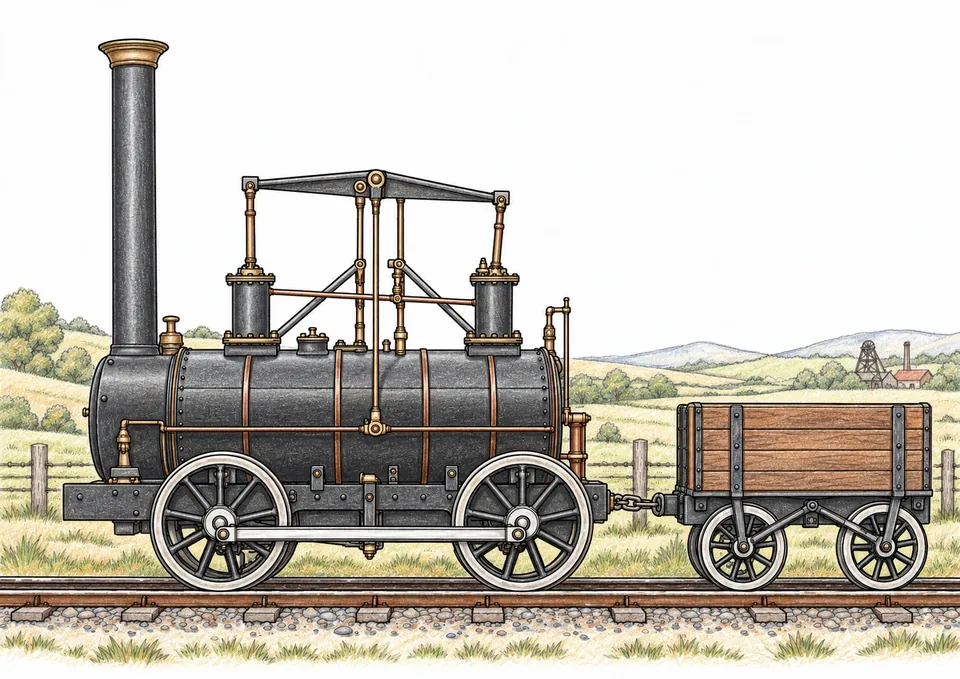
1813-1814 · 0-4-0 · Wylam Colliery
A working engine from the beginning of railway steam
Puffing Billy remained at work until 1862. It was then lent to the museum that became the Science Museum, which later purchased it.
Science Museum Group: Puffing Billy collection record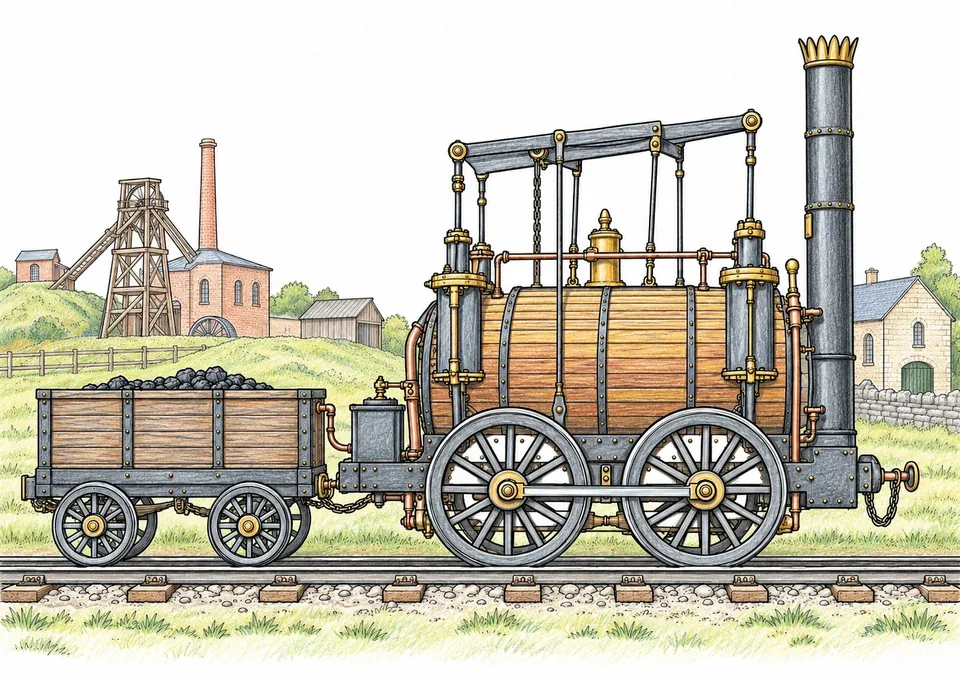
1825 · 0-4-0 · Robert Stephenson & Co.
A locomotive connected with a landmark opening day
After its railway career, Locomotion spent several years as a stationary engine before being restored for preservation in the 1850s.
Science Museum Group: Locomotion collection record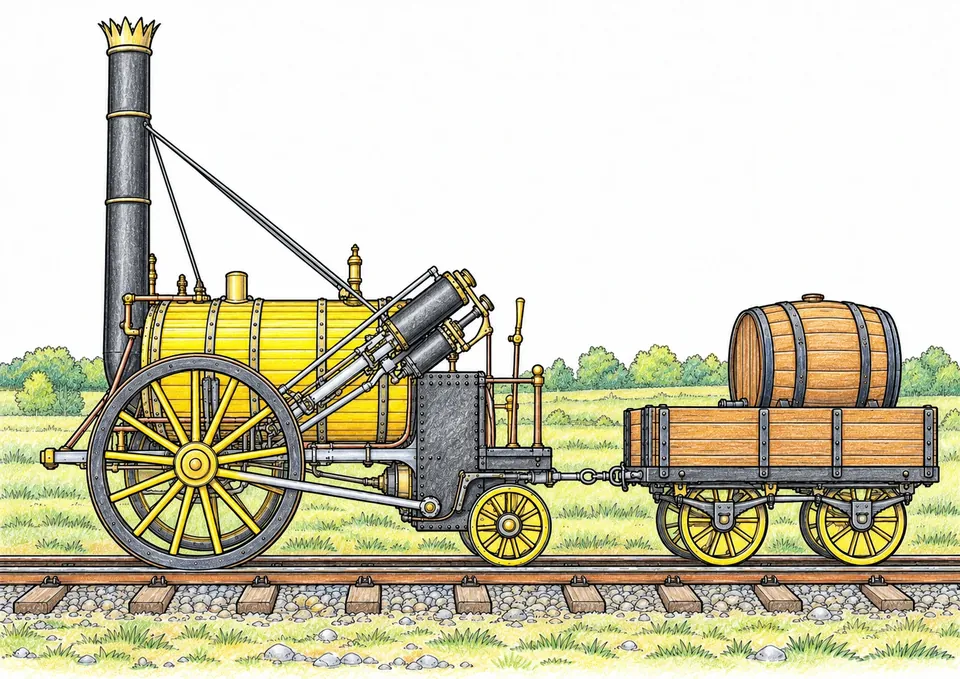
1829 · 0-2-2 · Robert Stephenson & Co.
A successful combination of ideas
Rocket was substantially rebuilt within about eighteen months of its Rainhill success. Even this celebrated design was quickly overtaken by further improvements.
Science Museum Group: Rocket collection record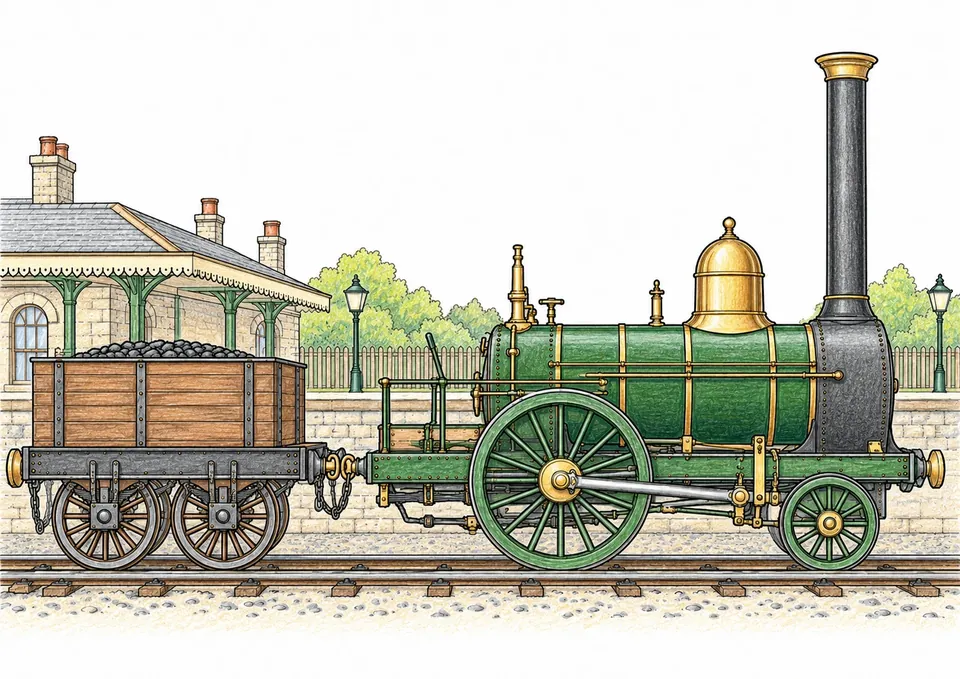
1830 · 2-2-0 · Robert Stephenson & Co.
A more familiar shape begins to emerge
By February 1833, Planet was reported to have covered 41,000 miles and still to be in good condition, a substantial working record for an early locomotive.
Science Museum Group: Planet model and original design record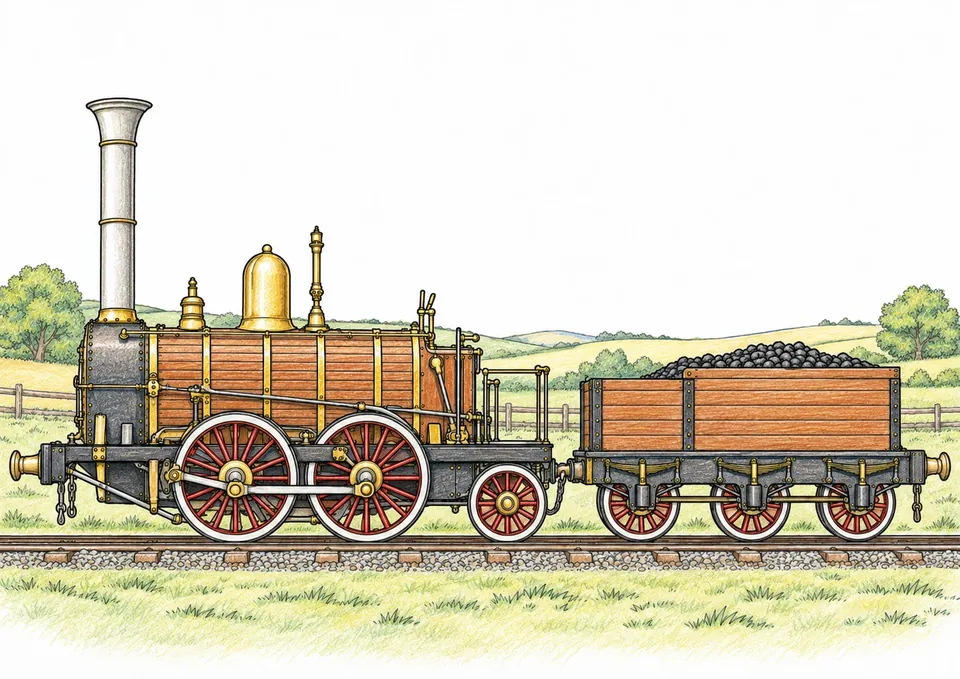
1838 · 0-4-2 · Todd, Kitson & Laird
A goods engine with a remarkable second life
Lion became a film star as the elderly locomotive in the 1953 Ealing comedy The Titfield Thunderbolt.
Institution of Mechanical Engineers: Lion engineering heritage entry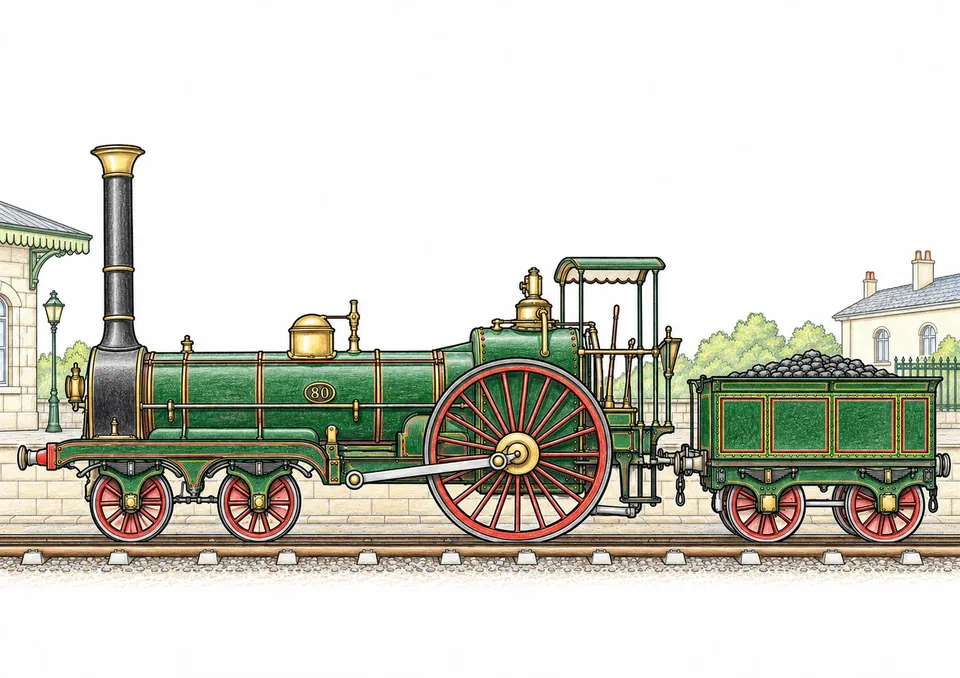
1852 · 4-2-0 · Cail
Large wheels behind a low boiler
Crampton's distinctive solution placed the driving axle behind the firebox, allowing unusually large driving wheels without raising the boiler above them.
Cité du Train collection: Le Continent; photographic identification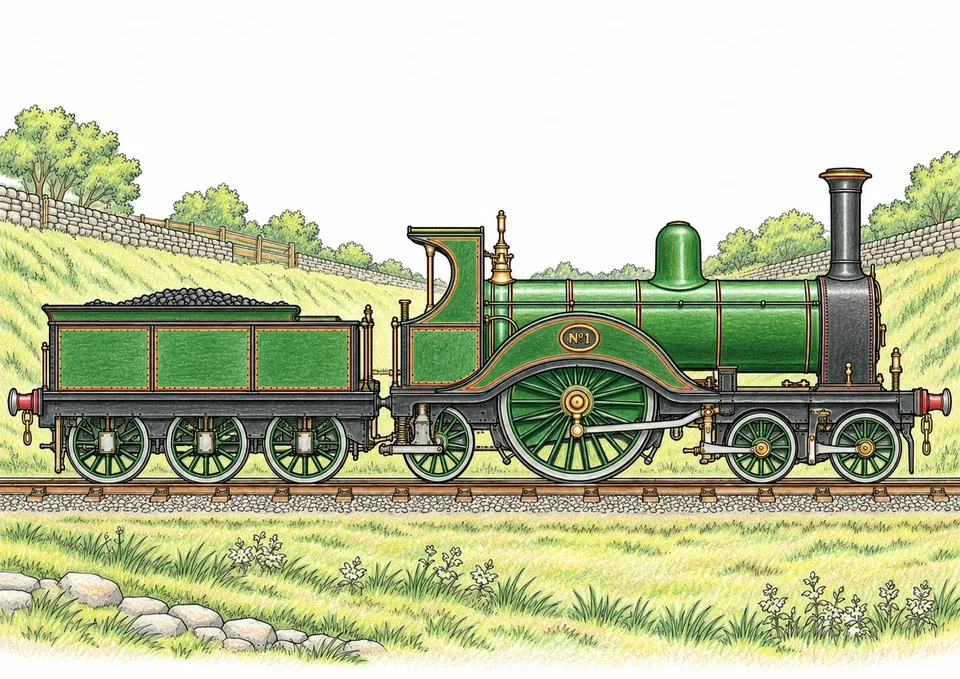
1870 · 4-2-2 · Doncaster Works
One great driving axle and an elegant outline
The term Single refers to the locomotive's one driving axle, not to a single cylinder or a solitary wheel.
Science Museum Group: GNR Stirling Single collection record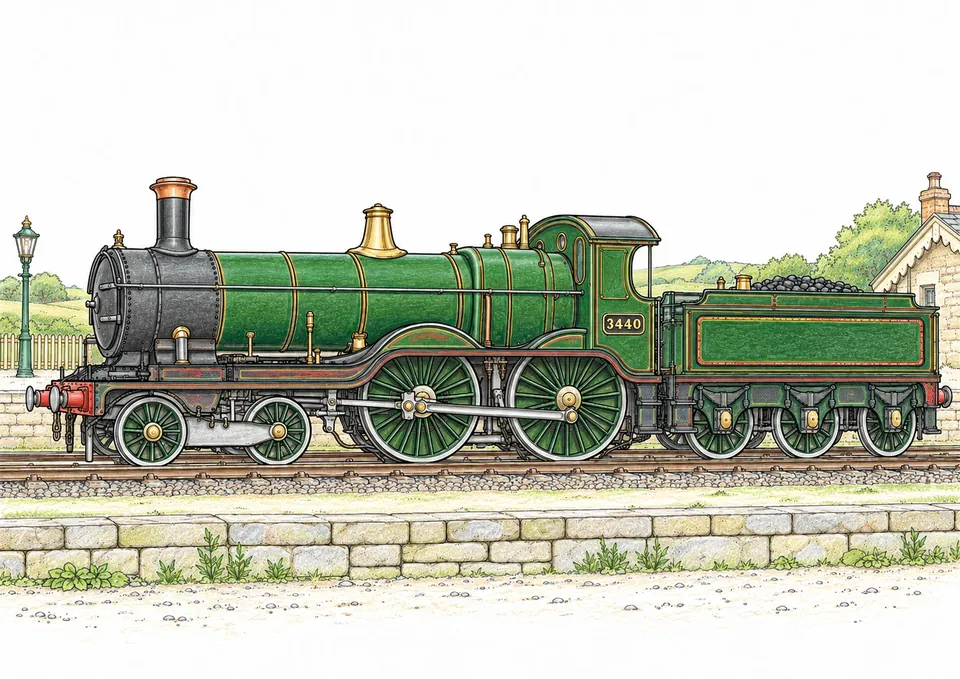
1903 · 4-4-0 · Swindon Works
Great Western elegance and a famous speed claim
City of Truro was renumbered from 3440 to 3717 in 1912, helping place engines of the same class in a consecutive number sequence.
STEAM Museum: locomotive collection, City of Truro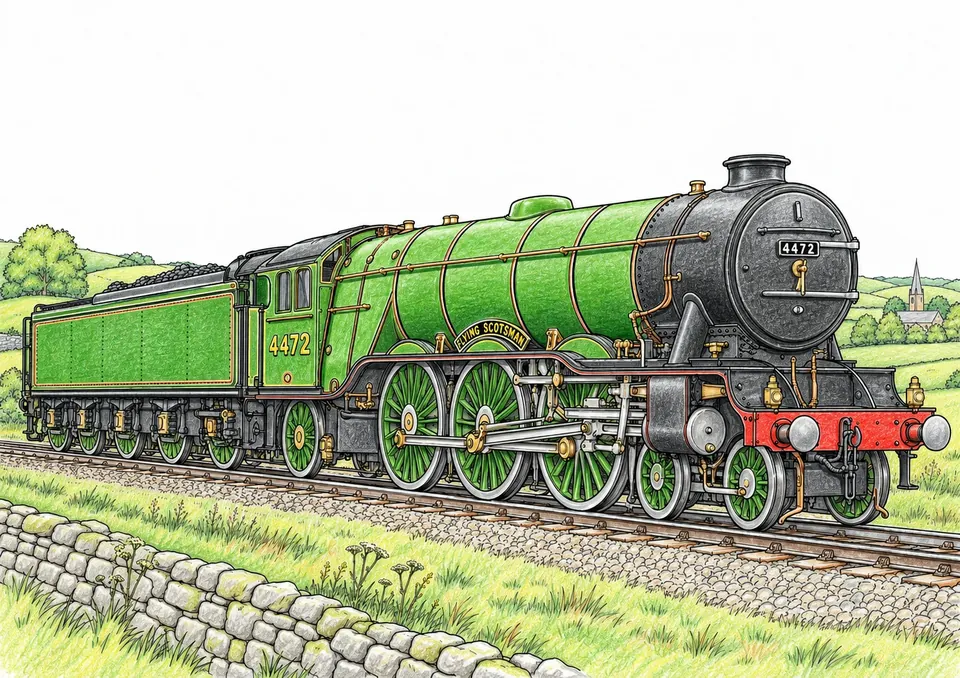
1923 · 4-6-2 · Doncaster Works
A familiar name with more than one appearance
A corridor tender fitted in 1928 allowed replacement crew members to reach the footplate from the train without stopping.
National Railway Museum: Flying Scotsman history and changing appearances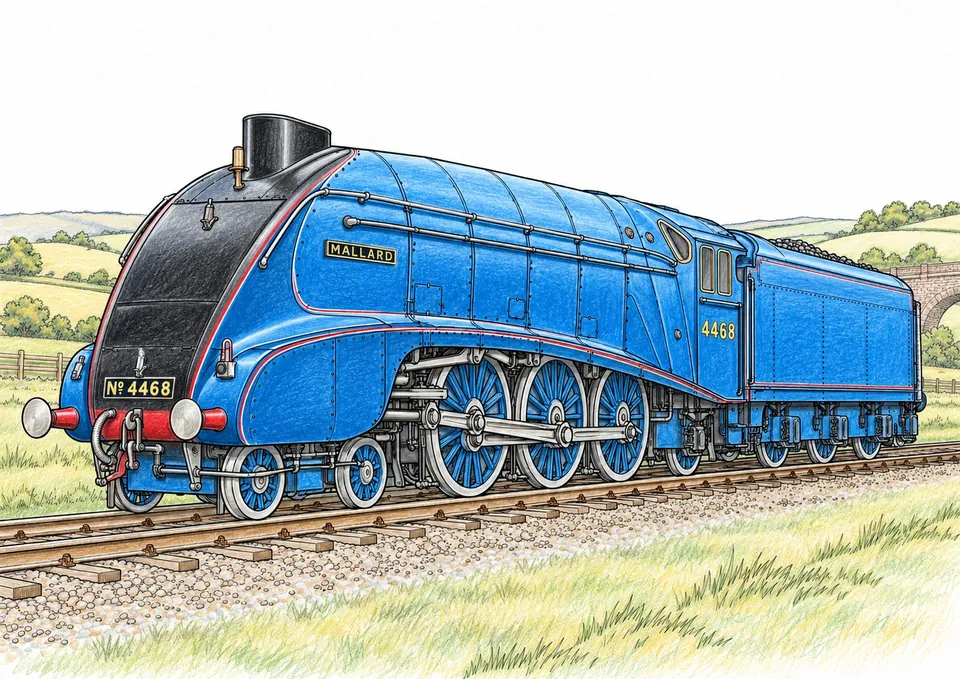
1938 · 4-6-2 · Doncaster Works
Speed expressed in a streamlined shape
Mallard's record run was a team achievement. Its crew included driver Joseph Duddington and fireman Thomas Bray, whose names deserve a place beside the locomotive's.
National Railway Museum: Mallard 75 and record-run crew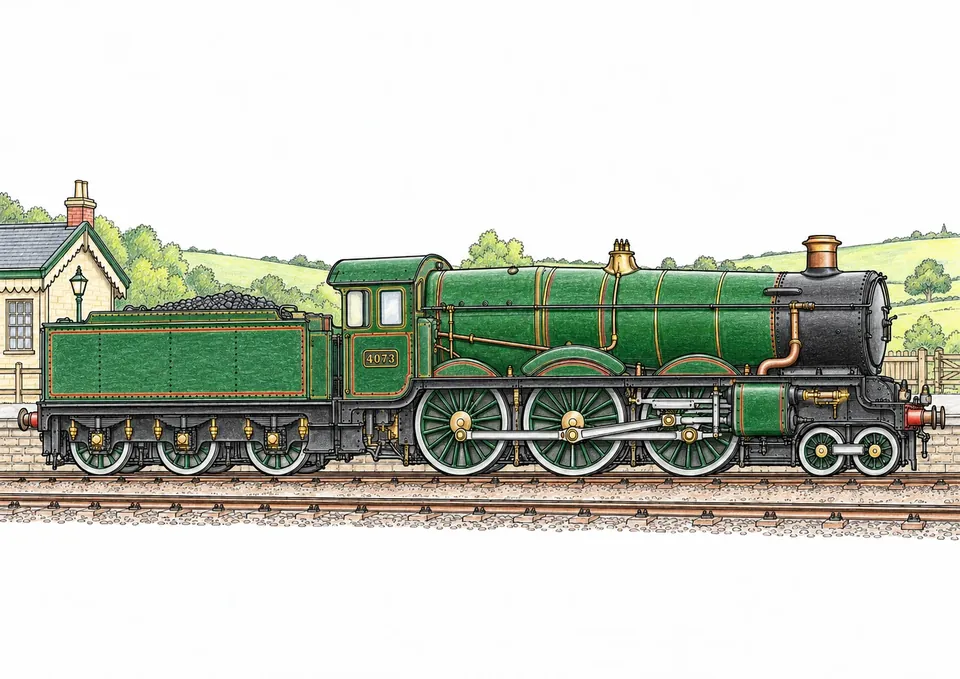
1923 · 4-6-0 · Swindon Works
A new class built on a strong family resemblance
Castle construction continued until 1950, long after the first engine entered service in 1923. The class total included sixteen locomotives rebuilt from earlier designs.
STEAM Museum: Castle class centenary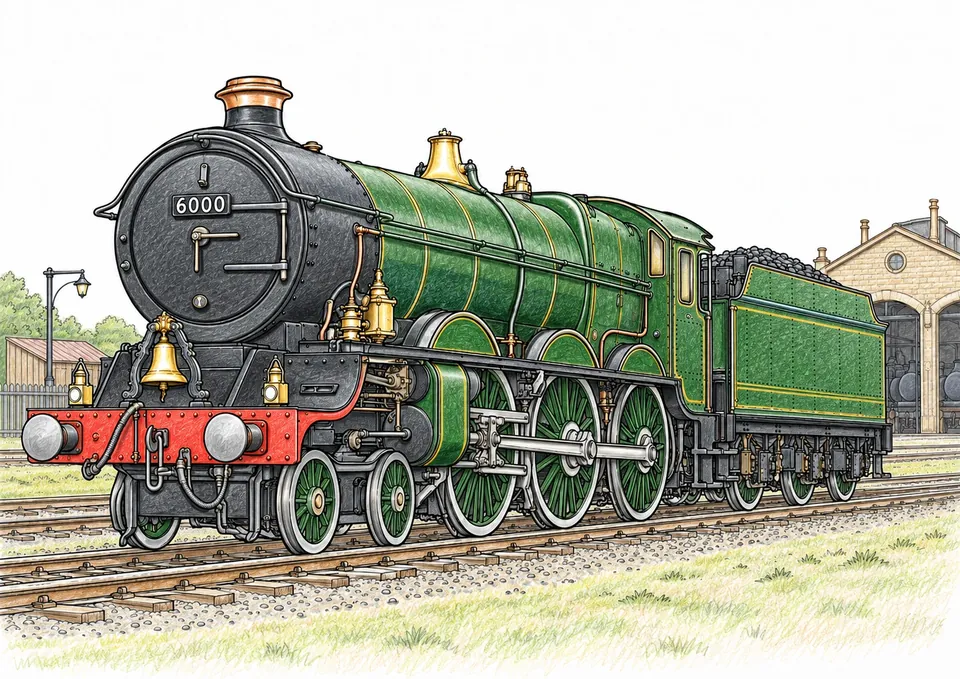
1927 · 4-6-0 · Swindon Works
Great Western power with an American souvenir
King George V crossed the Atlantic in 1927 to take part in the Baltimore and Ohio Railroad's centenary celebrations.
STEAM Museum: King George V and its American visit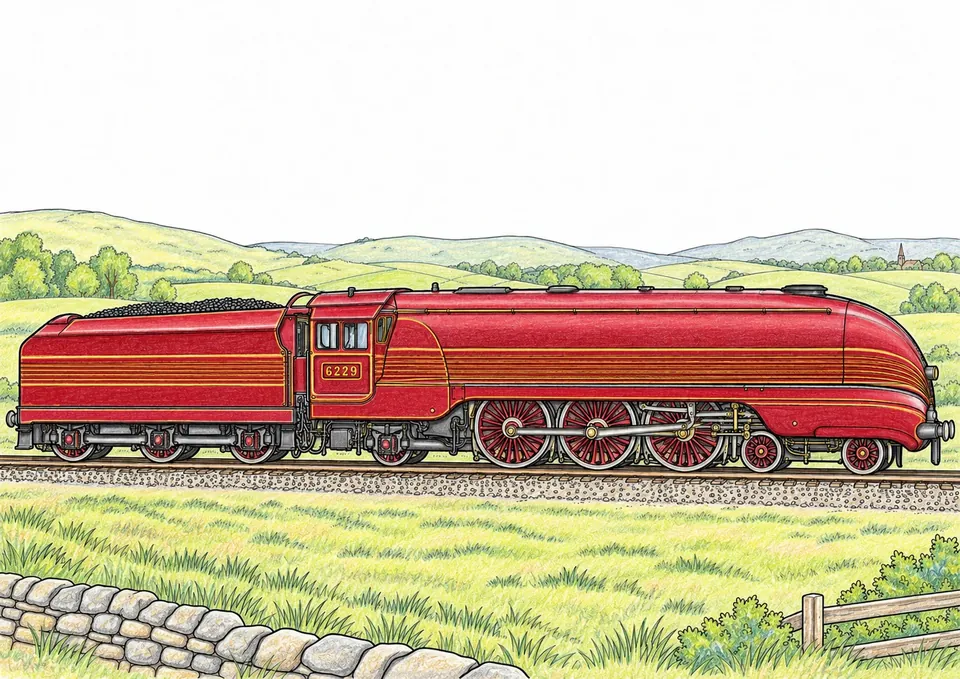
1938 · 4-6-2 · Crewe Works
A streamlined expression of inter-war confidence
The streamlined shape seen in preservation is a restoration. Duchess of Hamilton spent much of its later working life without the original casing.
National Railway Museum: Duchess of Hamilton restoration and crew recollections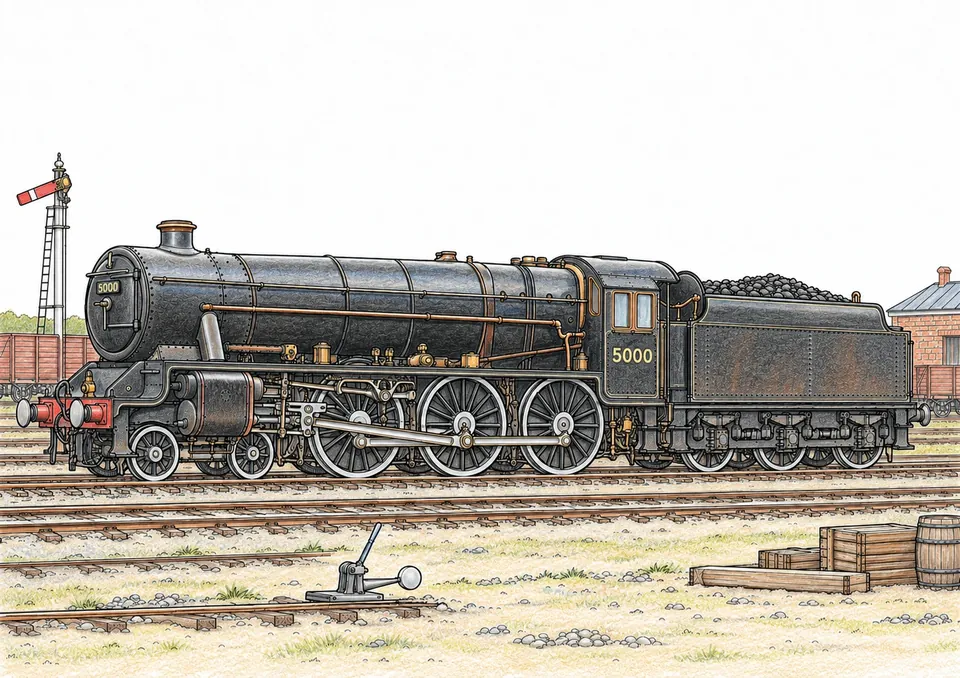
1935 · 4-6-0 · Crewe Works
The appeal of an engine built to do many jobs
Black Five production continued beyond the creation of British Railways in 1948. The design also influenced the later BR Standard Class 5MT.
Science Museum Group: Black Five No. 5000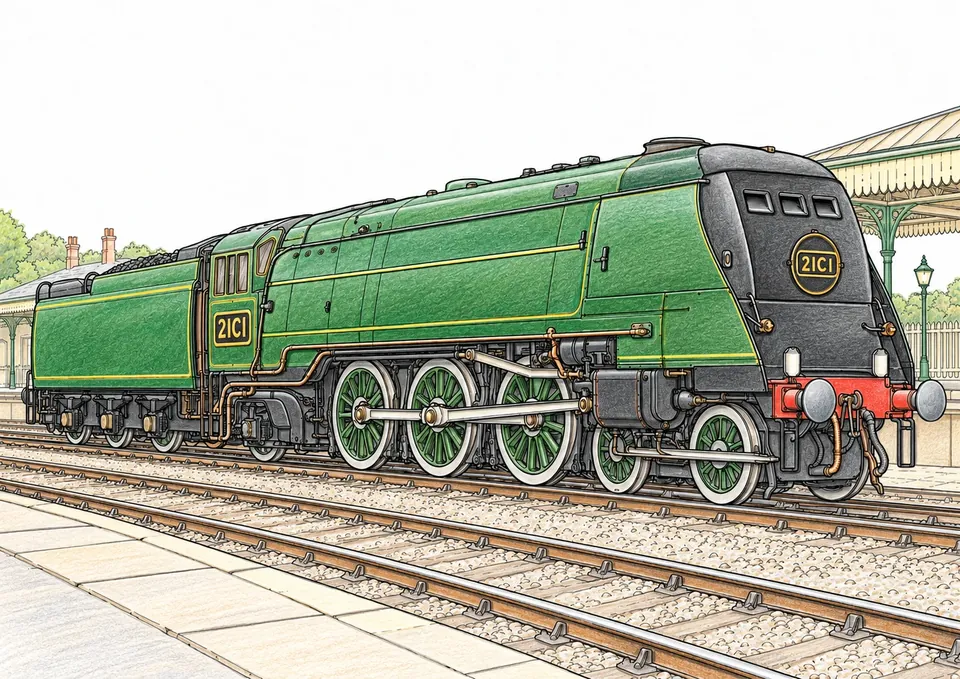
1941 · 4-6-2 · Eastleigh Works
Bulleid experiments beneath an air-smoothed casing
Bulleid's 21C numbering described the axle arrangement: two leading axles, one trailing axle and three coupled axles represented by C.
Southern E-Group: Merchant Navy class history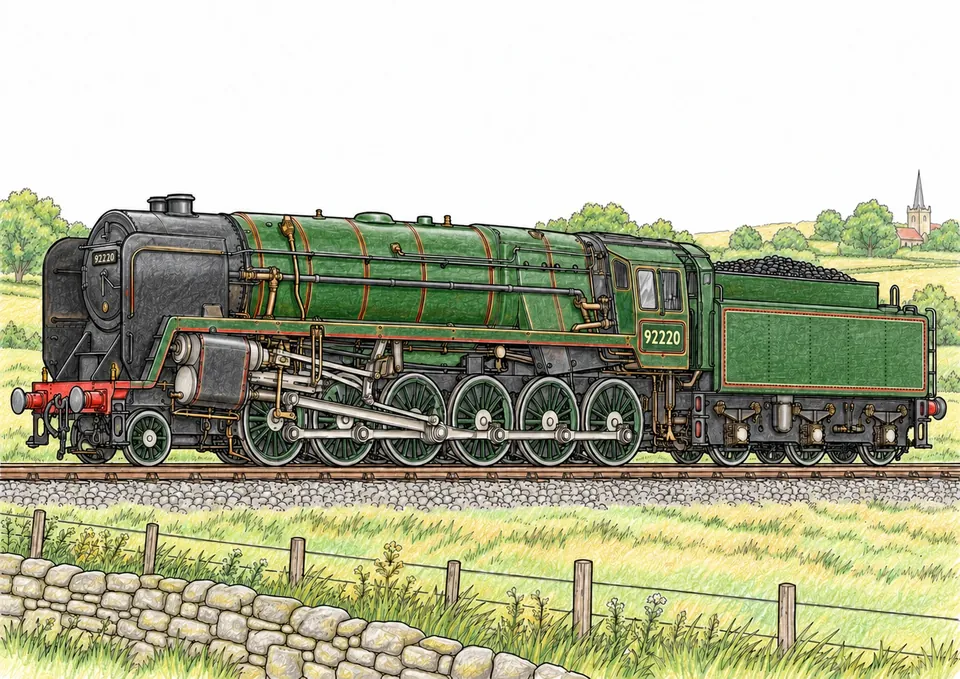
1960 · 2-10-0 · Swindon Works
A named farewell to British Railways steam construction
Evening Star's working career lasted only about five years, despite its place as the final steam locomotive built for British Railways.
Science Museum Group: Evening Star worksplate record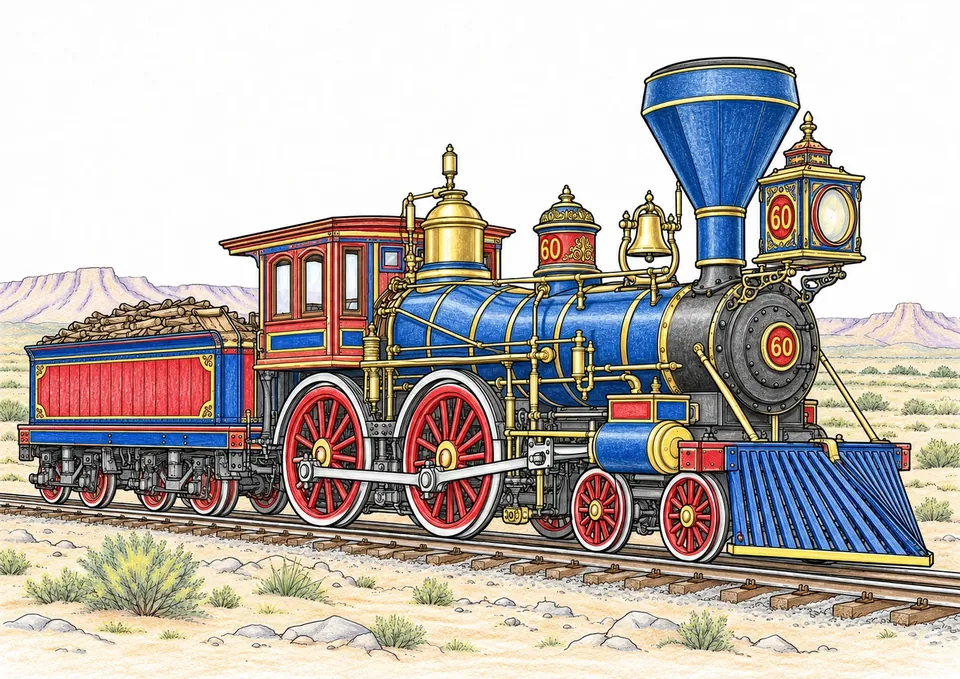
1868 · 4-4-0 · Schenectady Locomotive Works
An ordinary engine at an extraordinary meeting
Jupiter reached California by ship around Cape Horn. It was dismantled for transport and reassembled in Sacramento before entering service.
US National Park Service: Jupiter history and colour research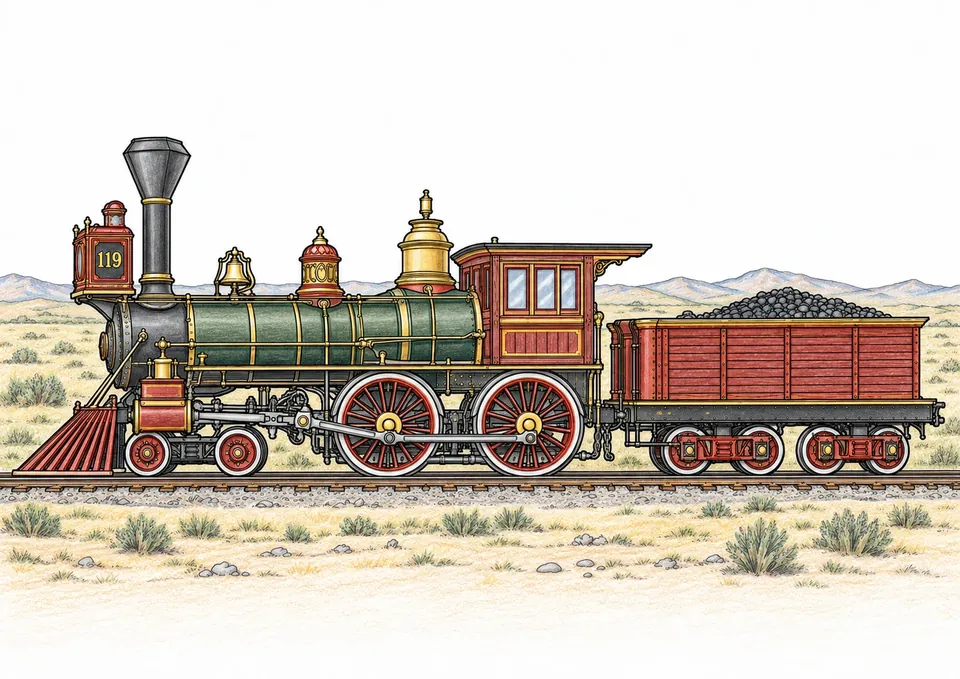
1868 · 4-4-0 · Rogers Locomotive & Machine Works
The other engine in a defining railway photograph
The engines operating at Golden Spike are replicas. The original No. 119 was scrapped in 1903 and the original Jupiter in 1906.
US National Park Service: Golden Spike frequently asked questions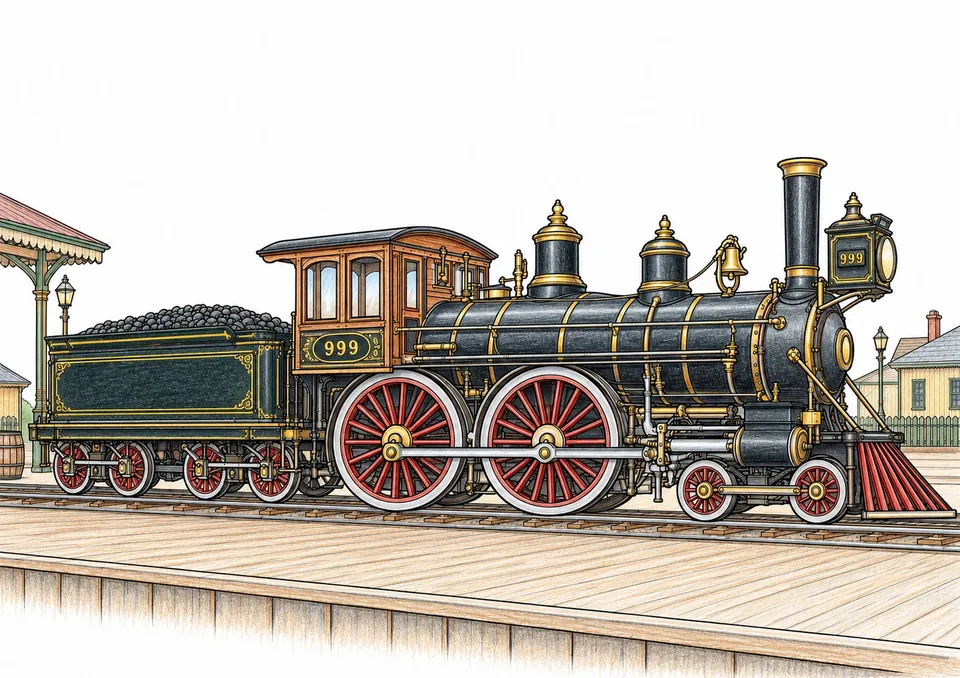
1893 · 4-4-0 · West Albany Shops
An express engine built to attract attention
The Smithsonian holds a model of No. 999 that was used to illustrate the technological development of the locomotive in its former Railroad Hall.
Smithsonian Institution: model of New York Central No. 999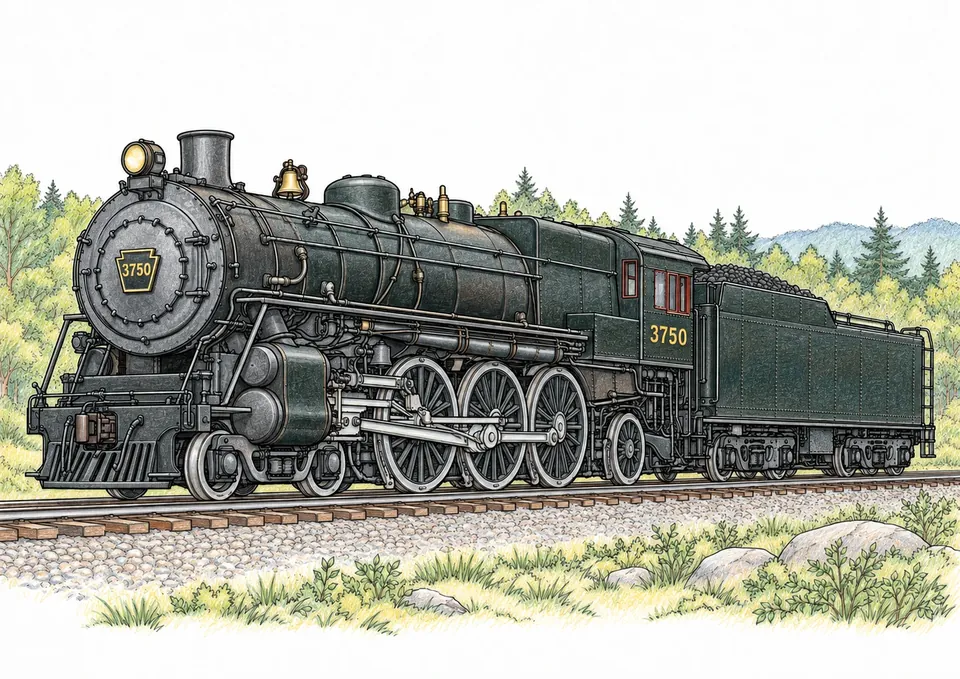
1918 · 4-6-2 · Juniata Shops
A Pennsylvania standard with a distinctive firebox
No. 3750 was once displayed under the identity of the scrapped prototype K4s No. 1737 before its own number was restored.
US National Park Service: Railroad Museum of Pennsylvania inventory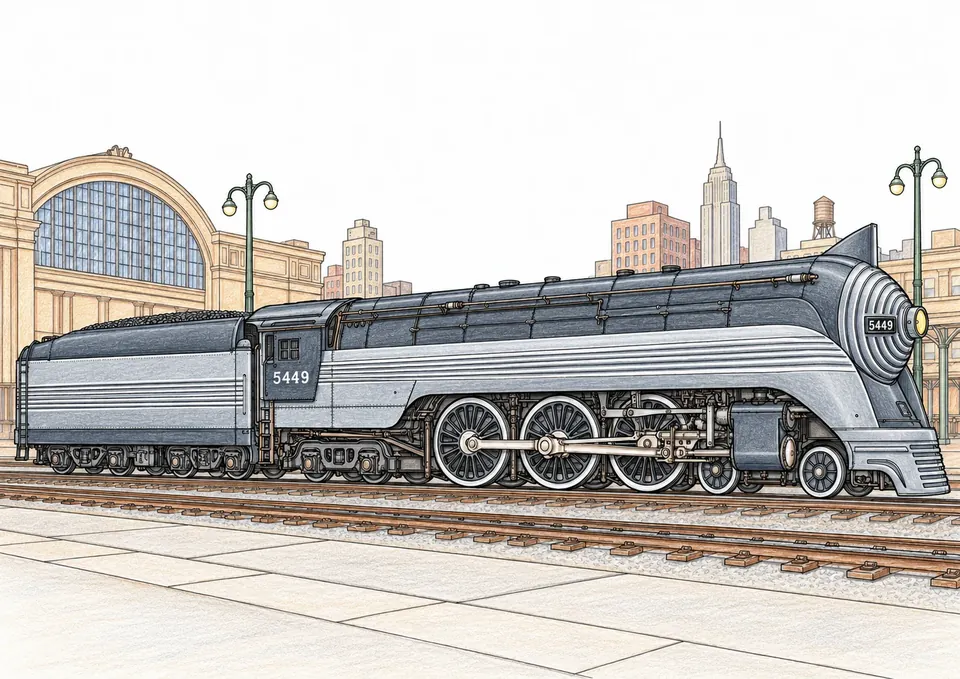
1938 · 4-6-4 · American Locomotive Company
Industrial design meets the steam locomotive
The locomotive's appearance was shaped by industrial designer Henry Dreyfuss, whose brief connected the engine with the visual identity of the Twentieth Century Limited.
New York Central System Historical Society: Dreyfuss Hudson historical material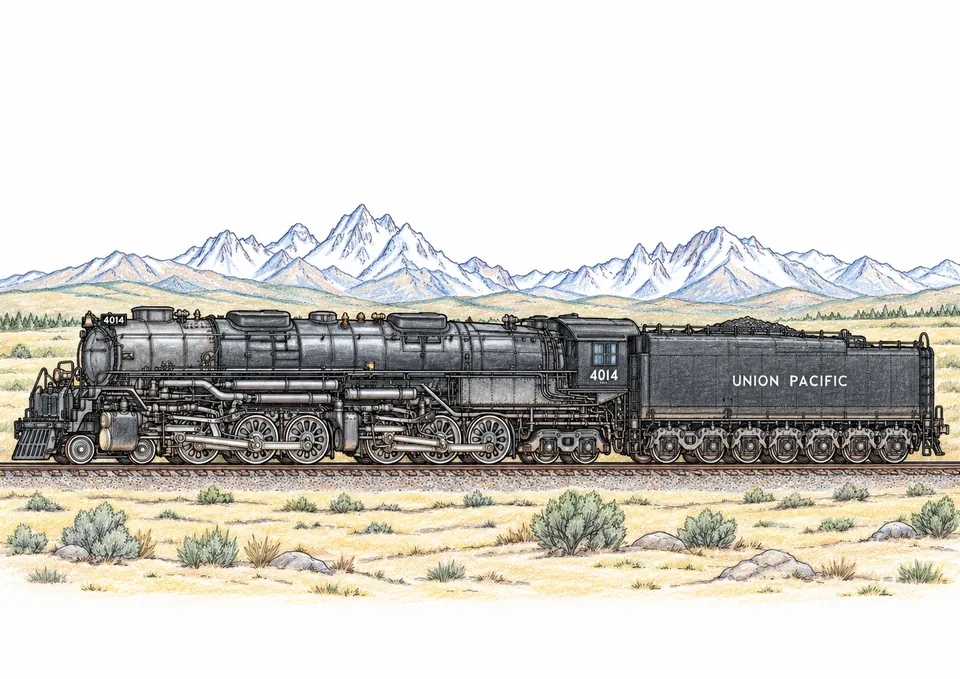
1941 · 4-8-8-4 · American Locomotive Company
Two sets of driving machinery beneath one vast boiler
Only twenty-five Big Boys were built. No. 4014's restoration included conversion from coal firing to oil firing.
Union Pacific: Big Boy No. 4014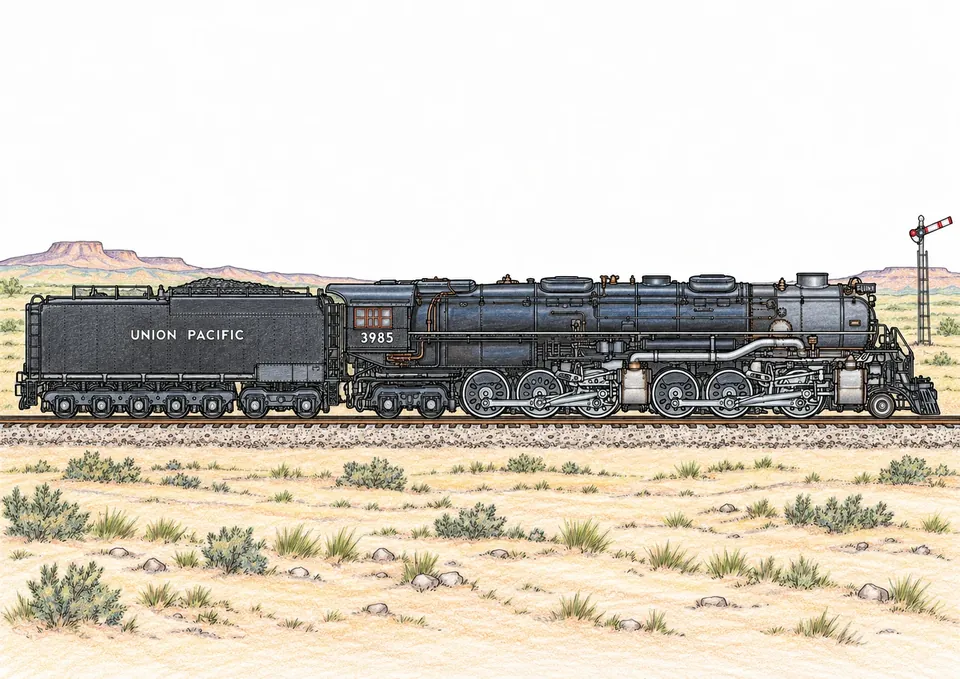
1943 · 4-6-6-4 · American Locomotive Company
Articulated power with a different balance
Union Pacific donated No. 3985 to Railroading Heritage of Midwest America in 2022, beginning another chapter in its preservation story.
Union Pacific: Challenger No. 3985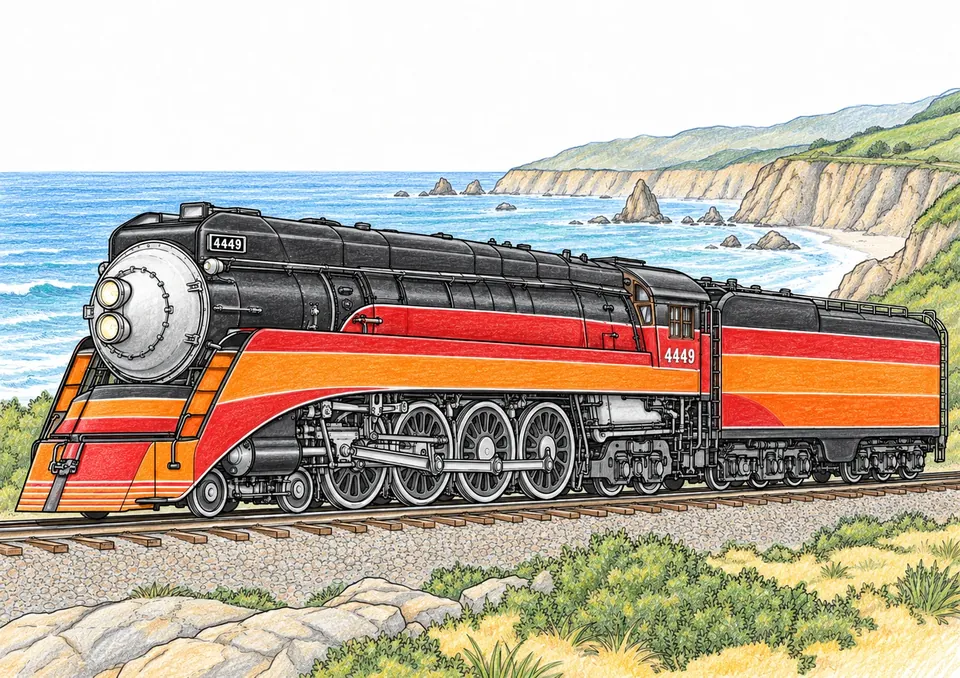
1941 · 4-8-4 · Lima Locomotive Works
Colour and power on the American west coast
No. 4449 was restored to help haul the American Freedom Train during the United States bicentennial celebrations of 1975 and 1976.
Oregon Rail Heritage Center: American Freedom Train exhibition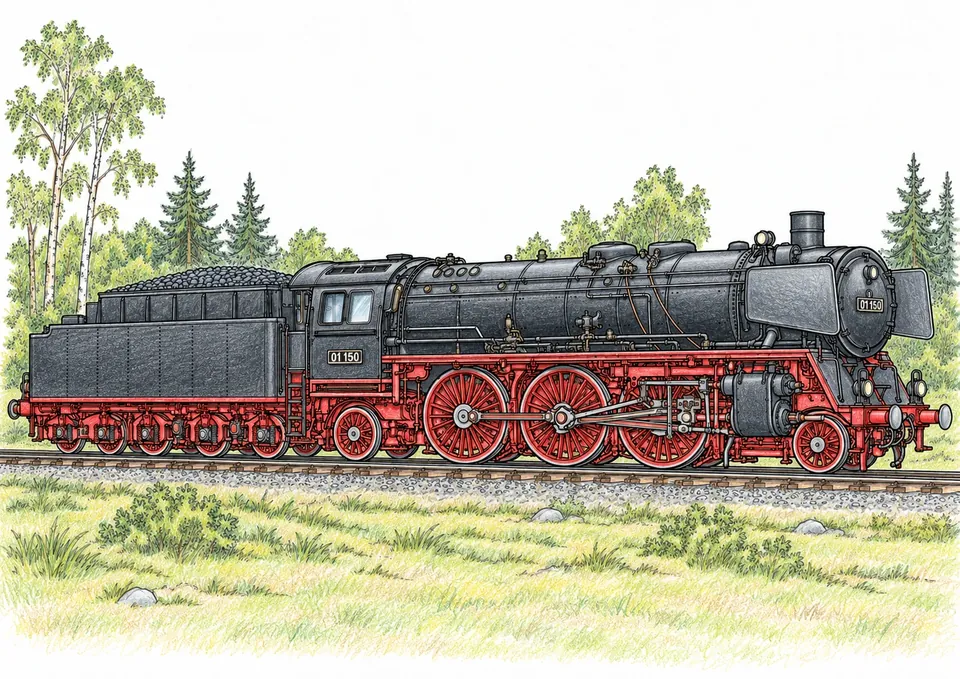
1935 · 4-6-2 · Henschel & Sohn
A standard Pacific with a strong German identity
No. 01 150 took part in the 1935 celebrations marking one hundred years of German railways, the same year it was built.
Märklin historical account of No. 01 150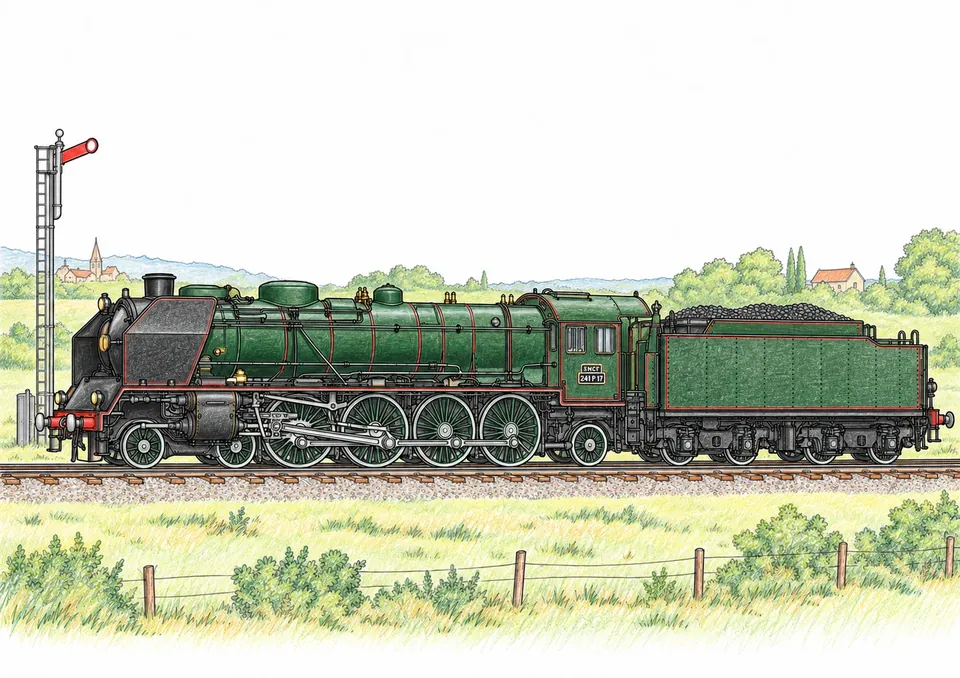
1950 · 4-8-2 · Schneider
A late expression of French compound steam
The preservation group's career record credits 241 P 17 with 1,741,865 kilometres of commercial service.
Chemins de Fer du Creusot: 241 P 17 career record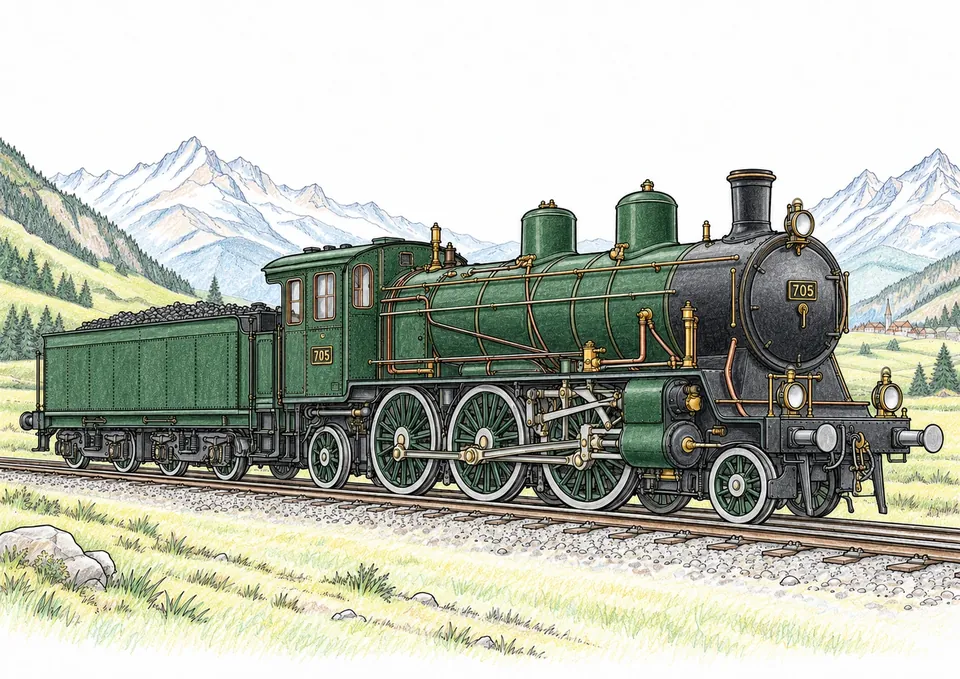
1904 · 4-6-0 · Swiss Locomotive & Machine Works
Swiss steam before electric traction changed the scene
In 1963, No. 705 received the chassis of No. 778. Its familiar number was retained along with its four-axle tender.
SBB Historic archive and Dampfgruppe Zürich technical record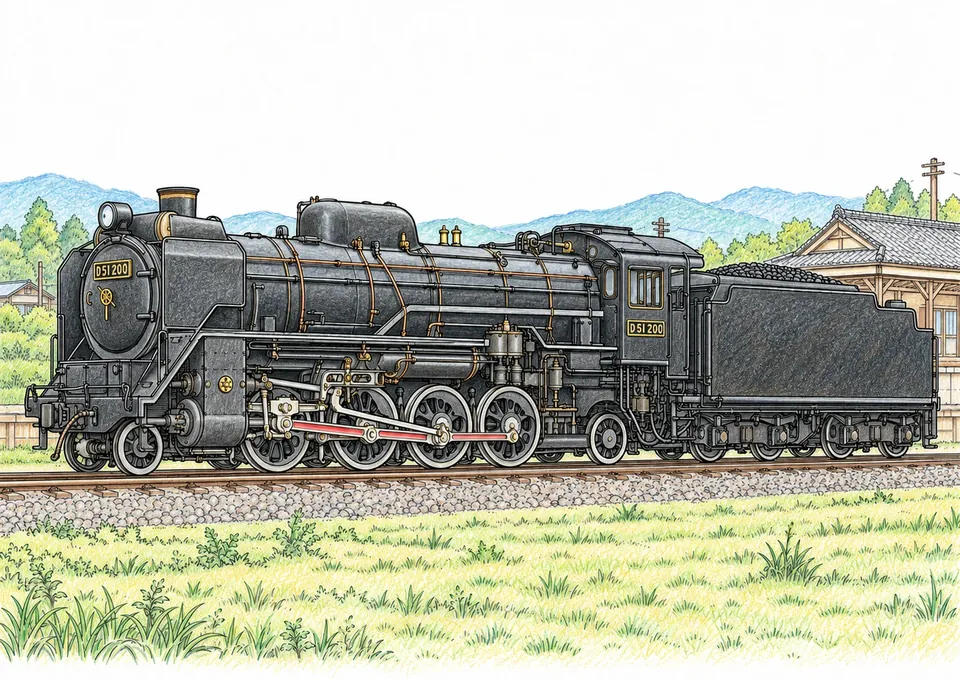
1938 · 2-8-2 · Hamamatsu Works
A familiar Japanese freight-engine family
JR West identified the 1938-built D51 200 for restoration to wider excursion use after its earlier role hauling museum demonstration trains.
JR West: steam preservation programme announcement, October 2014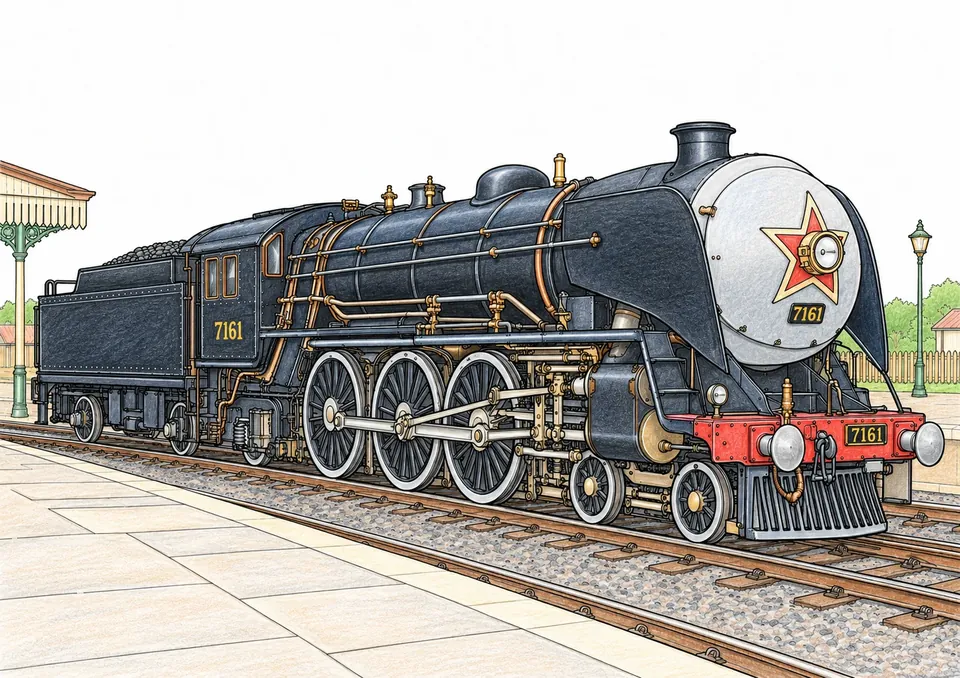
1965 · 4-6-2 · Chittaranjan Locomotive Works
A broad-gauge Pacific with a memorable face
Akbar was built in 1965, showing that new mainline steam locomotives were still being produced in India after many other railway systems had stopped ordering them.
Indian Railways heritage collection via Google Arts & Culture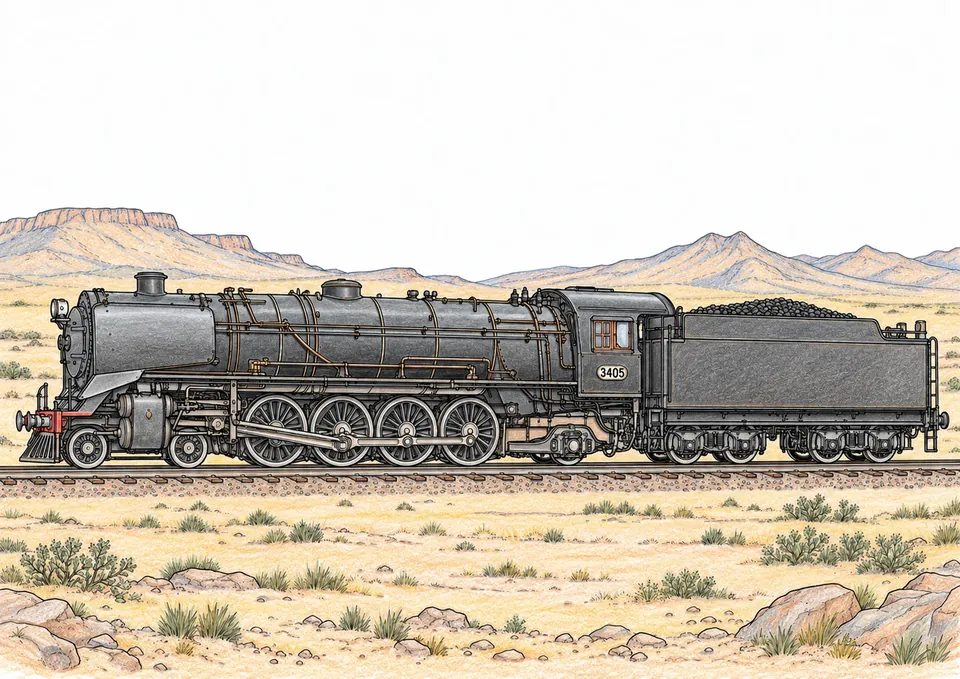
1953 · 4-8-4 · North British Locomotive Company
Large South African steam on Cape gauge
No. 3405 was built in Glasgow for South Africa and later returned to Britain for preservation, completing an unusual international round trip.
Buckinghamshire Railway Centre: Class 25NC No. 3405 stockbook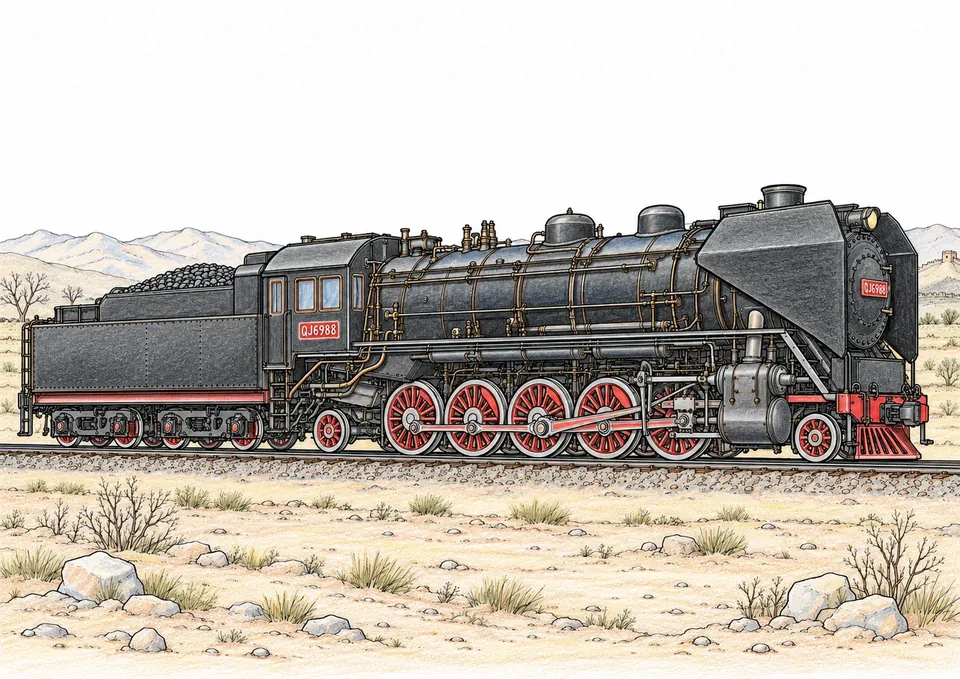
1985 · 2-10-2 · Datong Locomotive Works
Mainline steam built late in the twentieth century
No. 6988 was built in 1985 and later shipped to the United States, where it became part of an American steam-preservation programme.
Central States Steam Preservation Association; US regulatory filing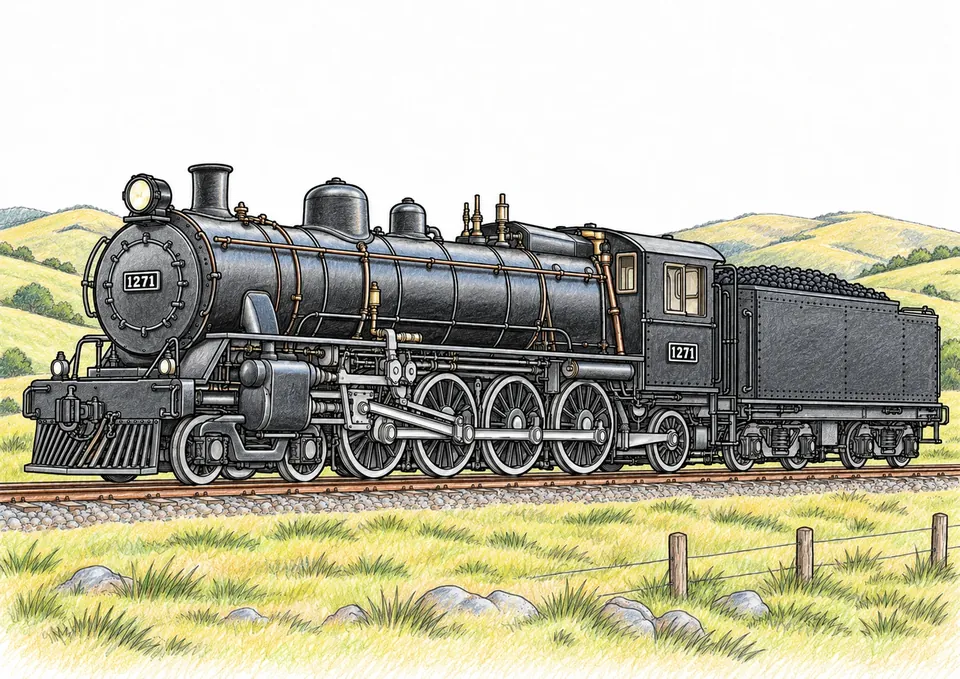
1956 · 4-8-2 · Hillside Workshops
New Zealand workshop skill with a long second life
After withdrawal, Ja 1271 spent several years supplying steam for boiler washouts at Dunedin before it was acquired for preservation.
Steam Incorporated: Ja 1271 history and technical details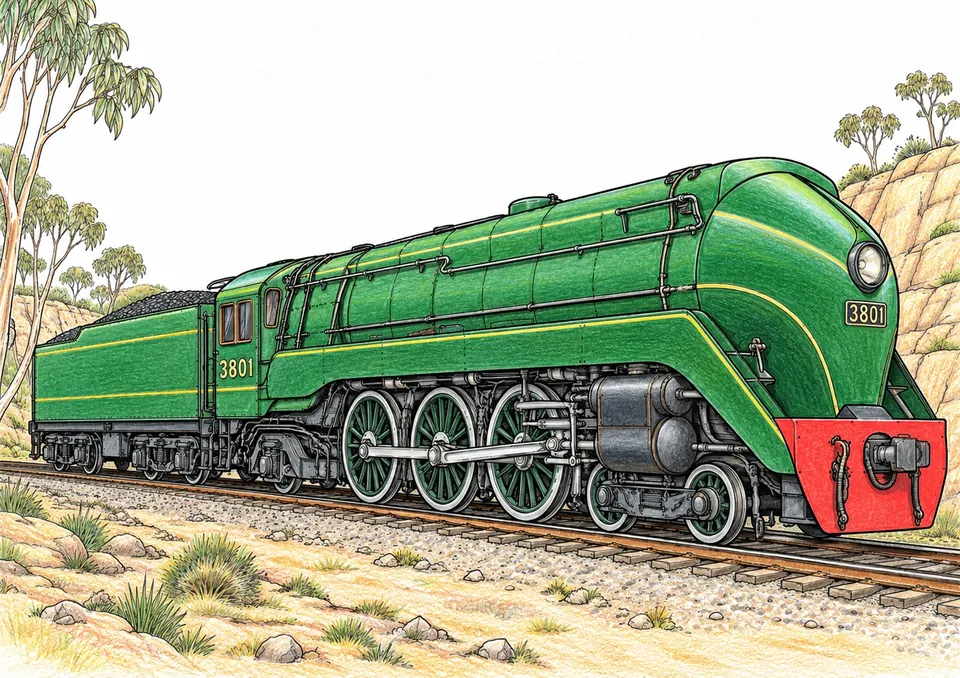
1943 · 4-6-2 · Clyde Engineering
An Australian Pacific with a national following
Only the first five C38 locomotives were semi-streamlined. The remaining twenty-five were built without that casing at Eveleigh and Cardiff workshops.
Transport Heritage NSW: locomotive 3801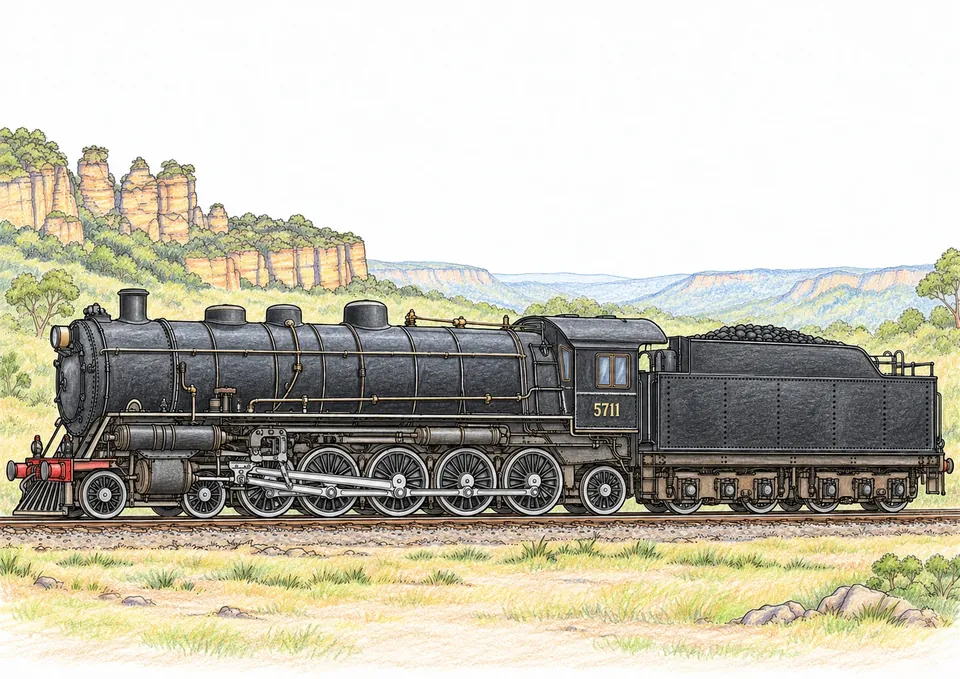
1929 · 4-8-2 · Clyde Engineering
A large boiler built for demanding goods work
The D57 locomotives were built by Clyde Engineering, but their large tenders were supplied by the shipbuilding firm Mort's Dock.
Preserved Steam Locomotives Down Under: 5711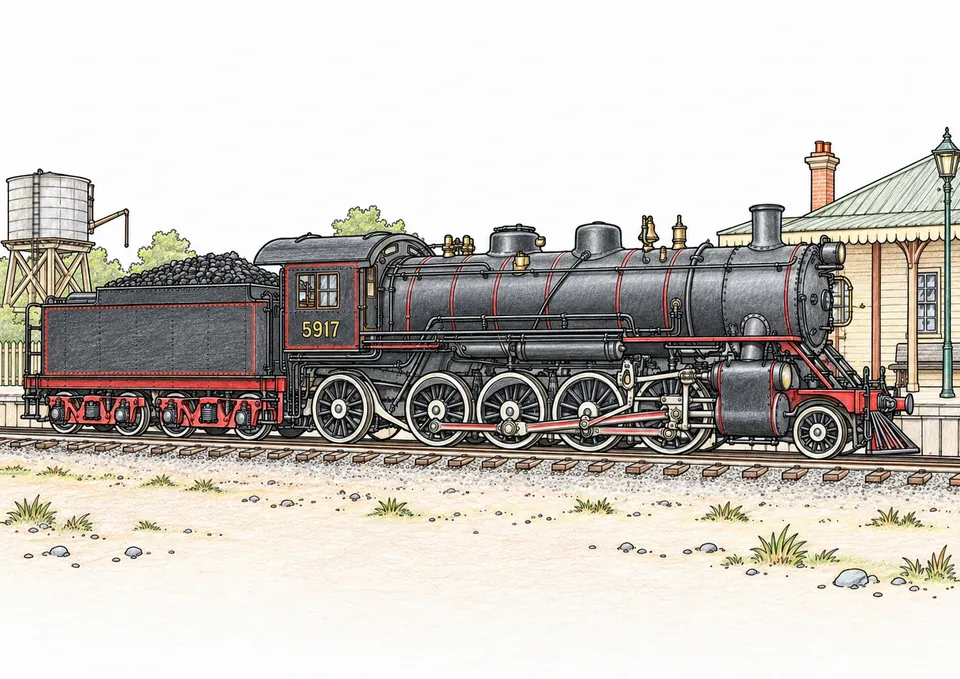
1952 · 2-8-2 · Baldwin-Lima-Hamilton
American-built power with an Australian working life
5917 was hauling early Picnic Train excursions to Kiama in 1973, linking today's heritage operation with a story more than fifty years old.
The Picnic Train: locomotive fleet and organisational history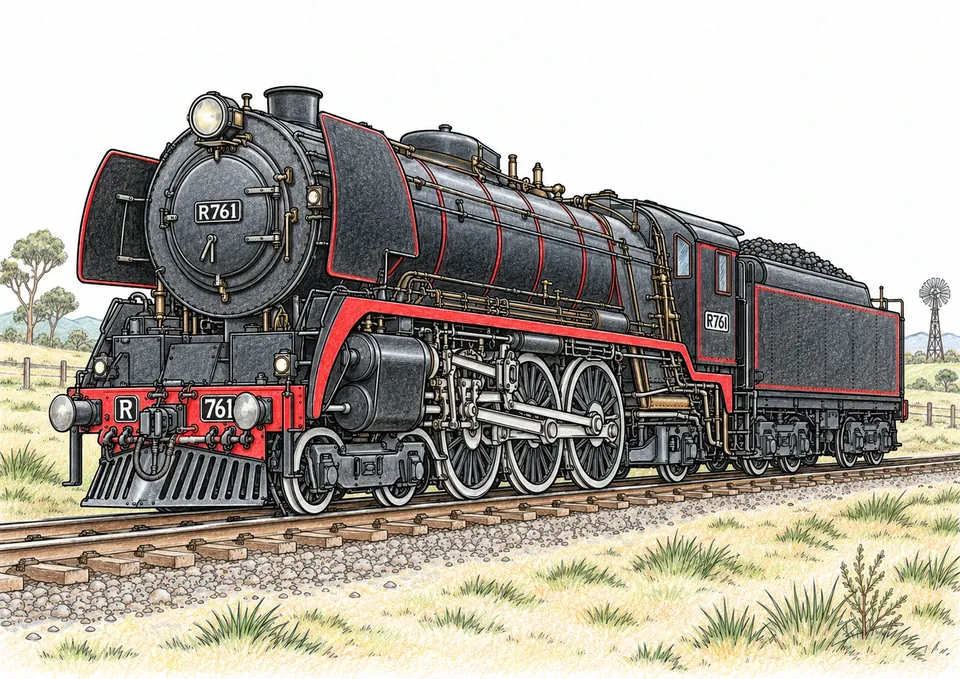
1951; service from 1952 · 4-6-4 · North British Locomotive Company
A Scottish-built Hudson for Victorian broad gauge
R761's builder's year is 1951, while its Victorian service began in April 1952. Those two dates describe different stages of its arrival.
Preserved Steam Locomotives Down Under: R761; VICSIG service register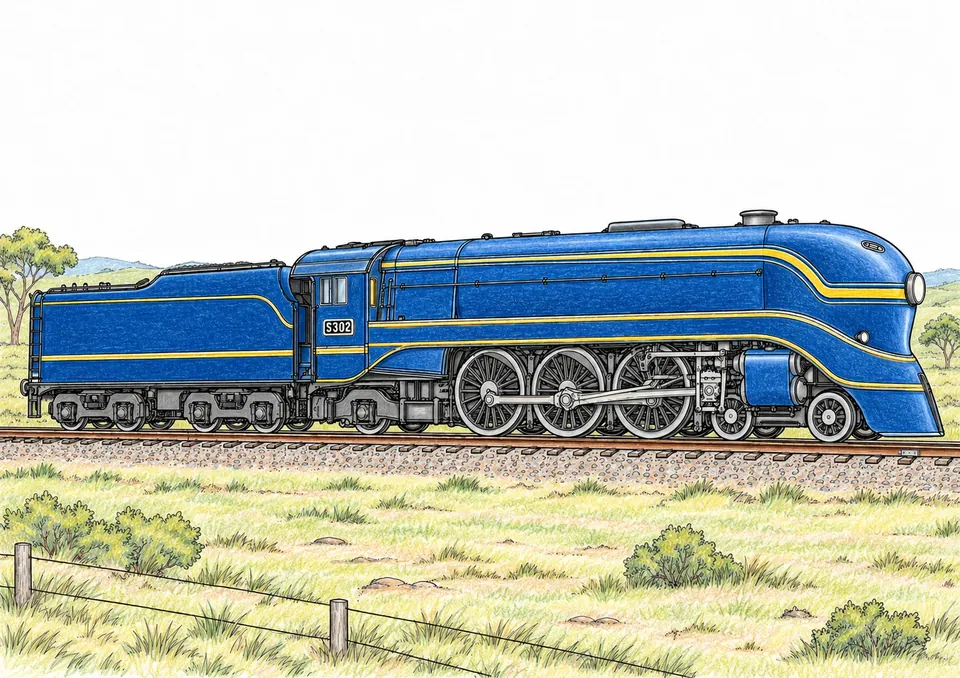
1929; streamlined in 1937 · 4-6-2 · Newport Workshops
The streamlined face of the Spirit of Progress
S302 was already an established locomotive when it gained its streamlined casing in 1937. The famous appearance was a later transformation.
Museums Victoria: S302 Edward Henty number plate and history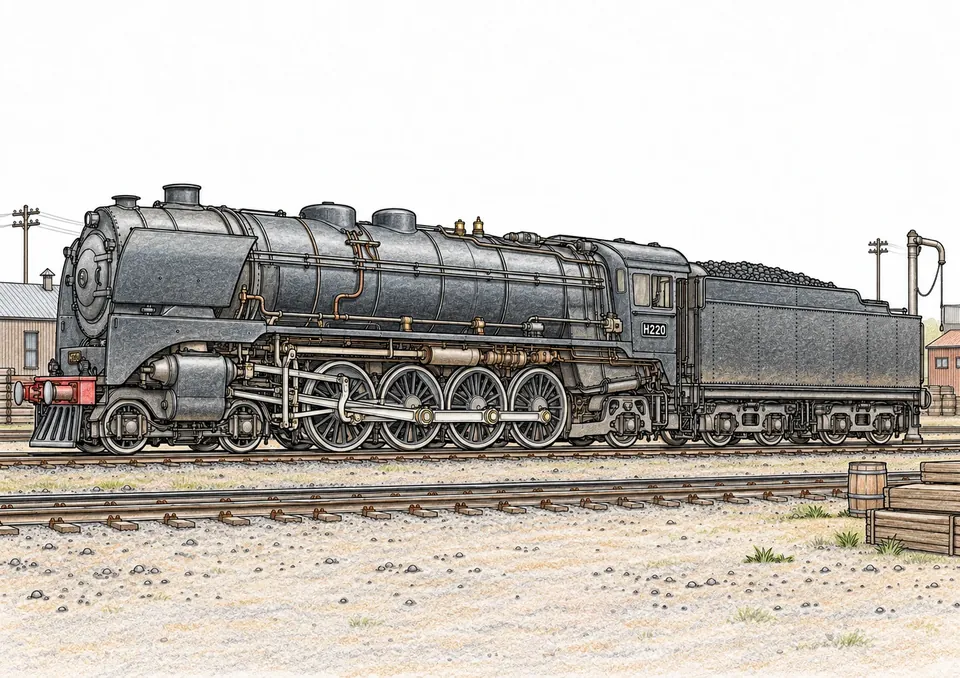
1941 · 4-8-4 · Newport Workshops
A giant whose career took an unexpected direction
Only three Victorian turntables could turn H220 without separating its engine and tender: North Melbourne, Albury and Ararat.
Newport Railway Museum: H220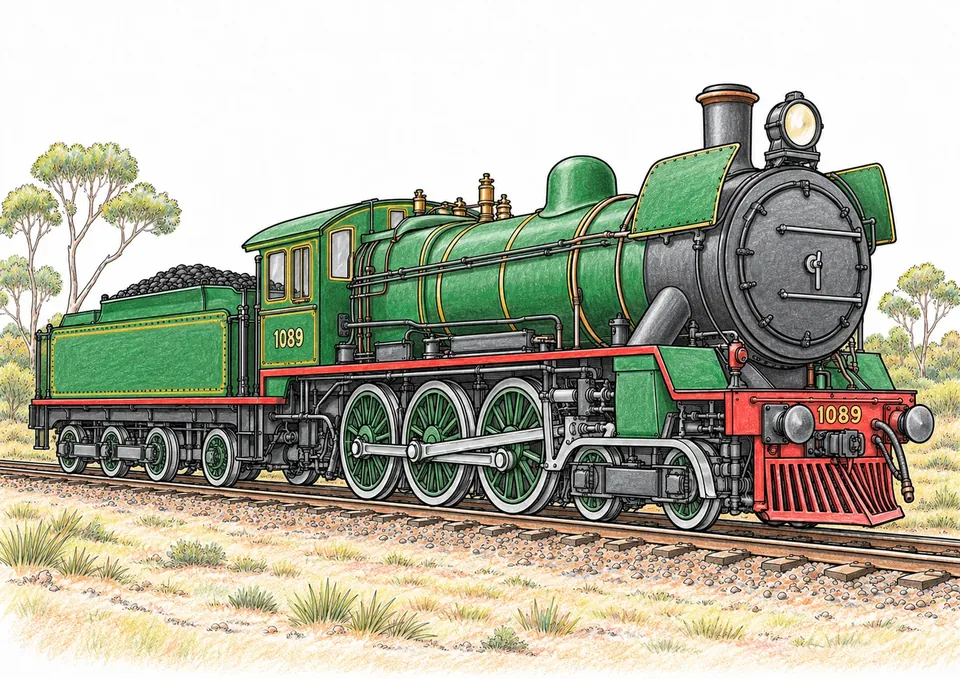
1958 · 4-6-2 · Walkers Limited
A Queensland-built Pacific near the end of an era
No. 1089 entered service on 13 March 1958. It is recognised as the last mainline steam locomotive built in Australia.
Ipswich Libraries: railway workshops; Queensland locomotive records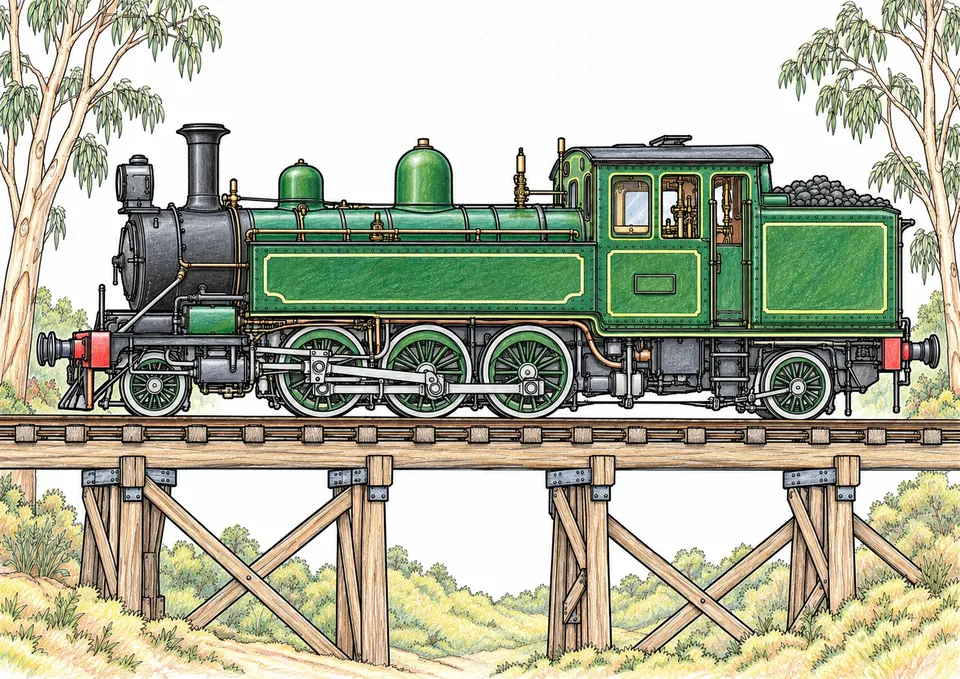
1901 · 2-6-2T · Newport Workshops
A compact tank engine to close the collection
6A worked on all four Victorian Railways narrow-gauge lines during its career, although much of its service was on the Colac and Gembrook routes.
Puffing Billy Railway: locomotive fleet, 6ATry another name, number or builder.